Expedition Blog – Meleki Schuster, Antarctic Peninsula 2026
Departure
Before leaving for Antarctica, all I could think about was how I was going to be horribly seasick.
I was watching too many videos of the Drake Passage, freaking myself out watching waves crash over ships. My friends were saying goodbye to me like they’d never see me again after the trip, which definitely didn’t help the nerves. I had zero experience on boats. I’d never slept on one, never sailed, and never spent more than a few hours out at sea. I’d even been seasick on the Wellington Inter-islander ferry before, so in my head I had already decided the Drake Passage would destroy me.
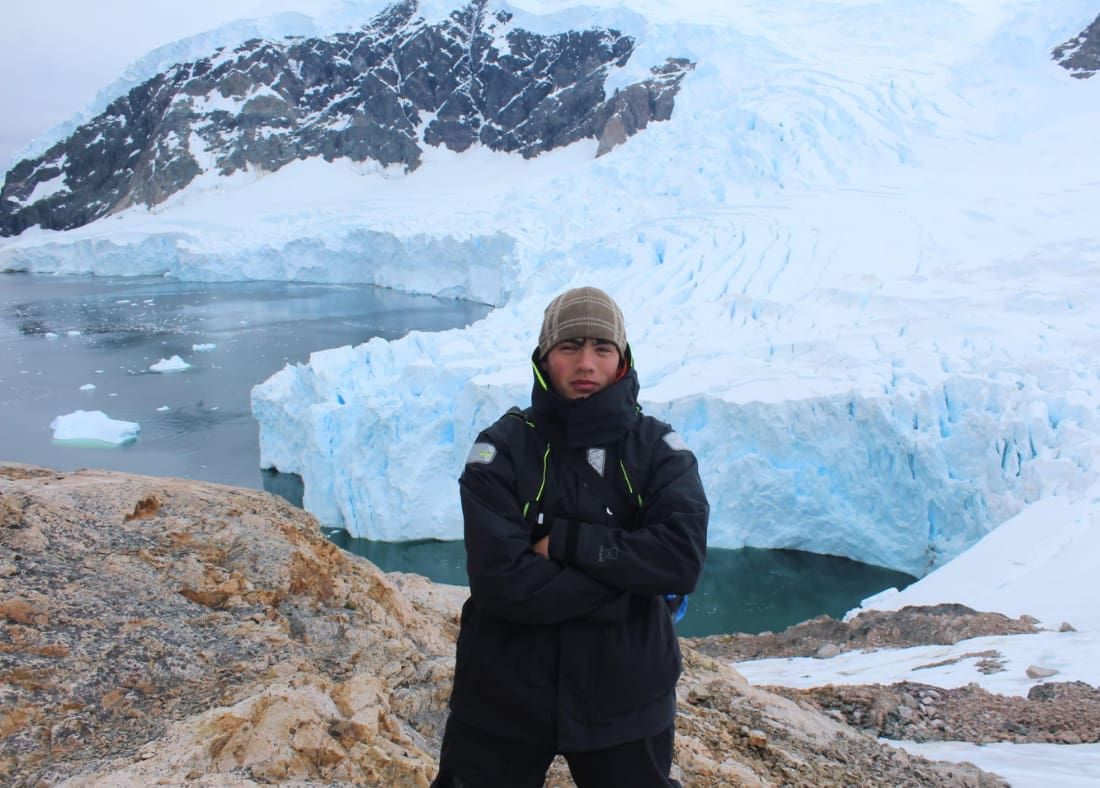
Underneath all the nerves, I was unbelievably excited. Antarctica had always felt completely out of reach to me, so finding out I’d actually been selected for the expedition didn’t fully feel real at all.
Then suddenly, I was standing in Ushuaia right in front of the Bark EUROPA.
Seeing the Bark EUROPA made everything suddenly feel very real. It was tiny beside the massive cruise ships around it, which somehow made it feel even more intimidating.
And then almost just as quickly, we were heading straight into the Southern Ocean.
Bark EUROPA
Once we left the harbour, the Bark EUROPA felt like its own little world.
It didn’t take long for everyone to get comfortable around each other either. Shared chaos, seasickness, early wake ups, card games, yellow vomit buckets, and trying to survive the Drake Passage together created a bond between everyone on the ship.
The Drake Passage
The Drake Passage pushed me mentally more than anything else on the expedition. I felt horribly nauseous a lot during the crossing. Simple things like walking, showering, or eating were very difficult.
In my journal during the Drake I wrote:
“I’ve never felt so mentally and physically drained in my life.”
Looking back now though, I think that’s part of why it meant so much to me. The Drake stripped life for me to the basics, and somehow getting through it together made the experience even more rewarding.
And honestly, surviving the entire Drake Passage without vomiting once is something I’ll be bragging about for a long time.
Watching people stumble around the ship trying to walk in straight lines, timing movements so they wouldn’t get thrown across the room, and barely eating for days somehow became normal.
I think seeing everyone at both their lowest during the Drake, and then at their highest once we finally reached Antarctica, brought us together in a way nothing else really could.
Being in the middle of the ocean was a super surreal feeling for me, only seeing water in every direction. No land, no lights, nothing familiar at all. I felt like we’d left the normal world behind and were properly out on an adventure.
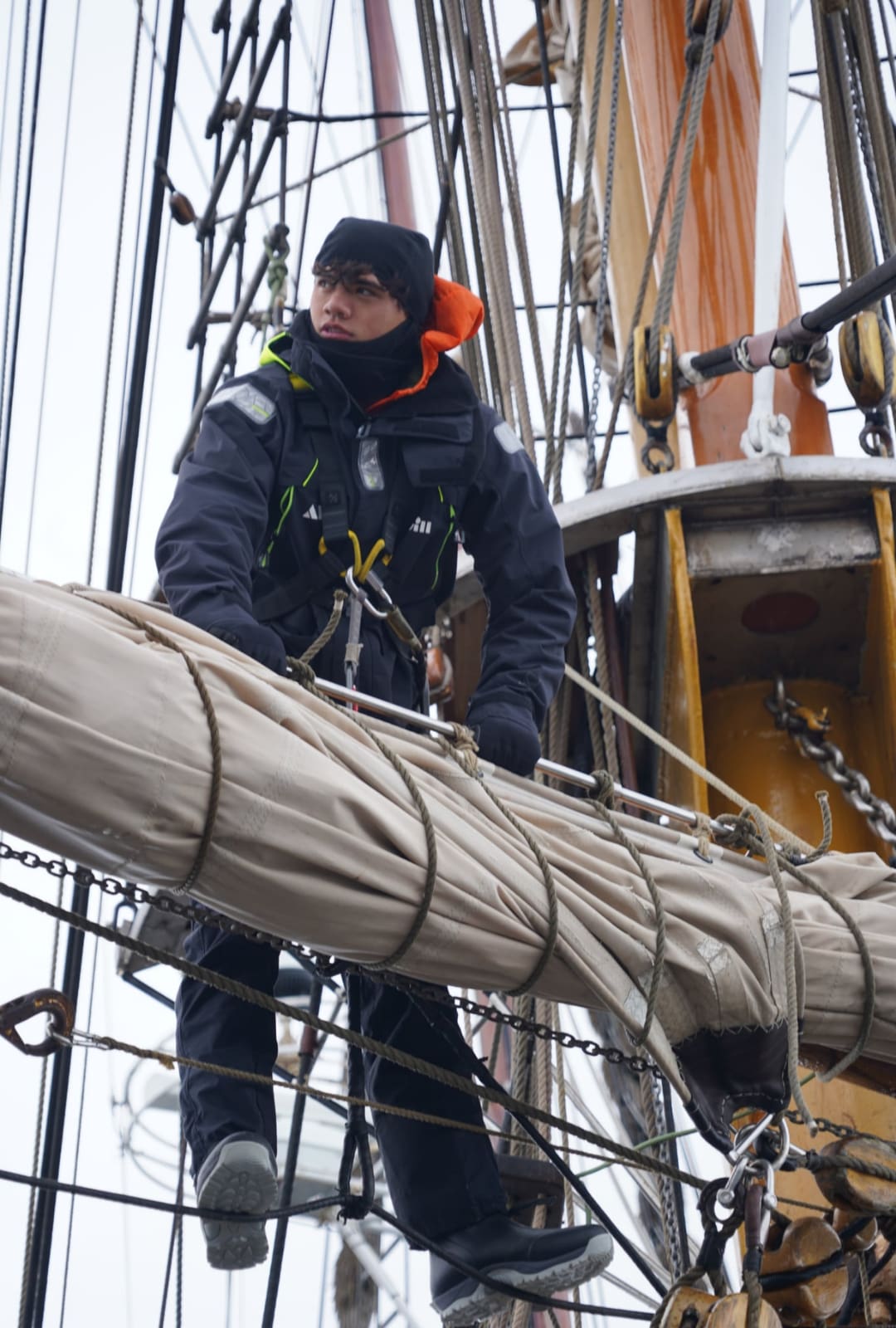
I remember steering the helm during a night watch, freezing cold, exhausted, surrounded by darkness and huge swells. The ship would climb up a wave and suddenly drop again, and while clipped onto the boat I had to keep my eyes locked on the horizon to stop myself from feeling sick.
I remember thinking, “This world is my oyster.”
At some point during the crossing, I stopped trying to fight the chaos and accepted it for what it was. That’s when the old Samoan navigational proverb “Ua logo i tino matagi lelei” really started making sense to me. You can’t control the ocean or currents, the winds, stars or the elements around you. You can only control how you respond to them.
It also gave me a whole new respect for both Pasifika navigators and the early Antarctic explorers. Even with the latest and modern technology , and the amazing crew supporting us, it still felt exhausting and unpredictable.
Pasifika navigators crossed huge distances guided only by the stars, the ocean, and intergenerational knowledge. Thinking about people stepping into chaos like that with far less is honestly hard to comprehend.
Landfall
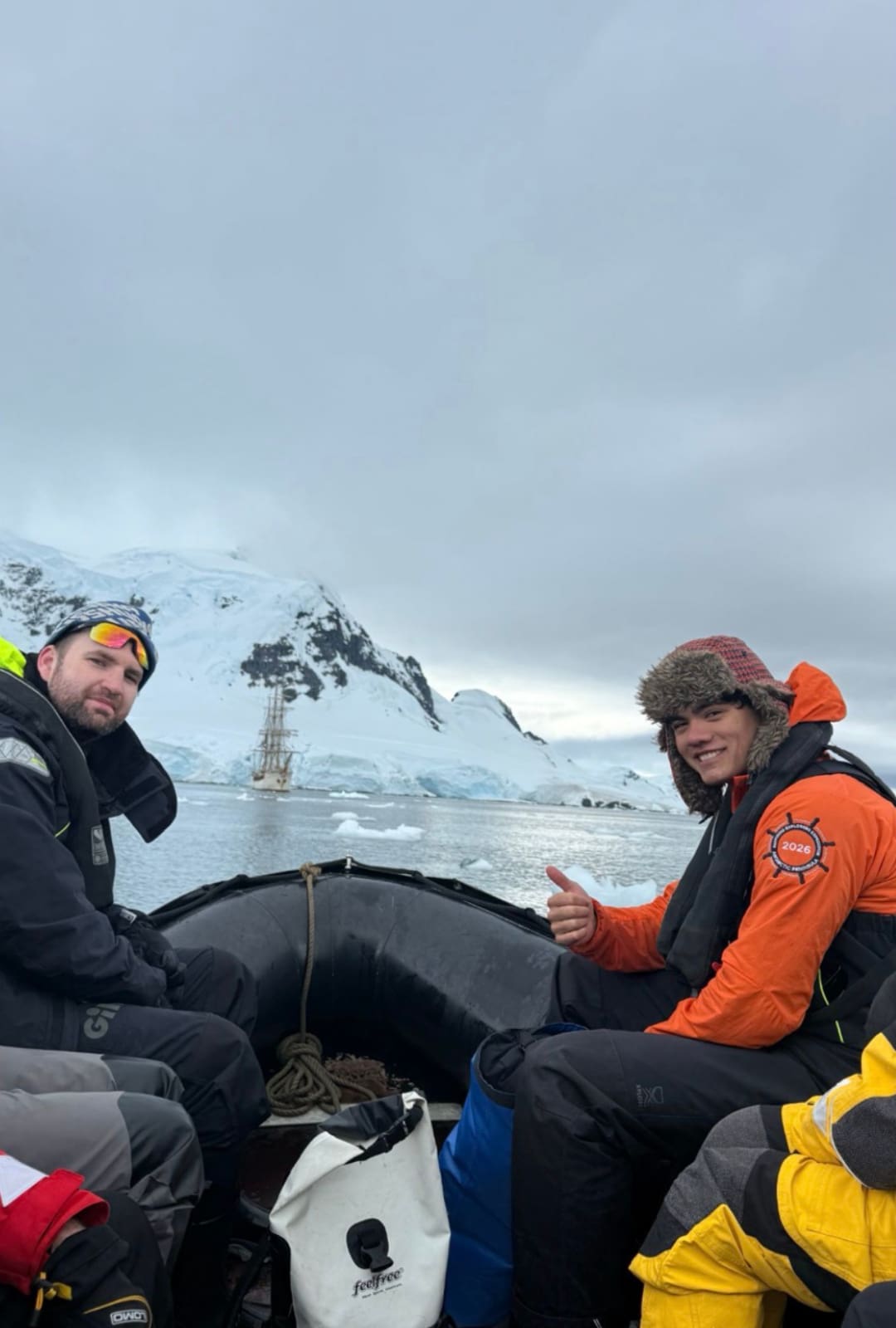
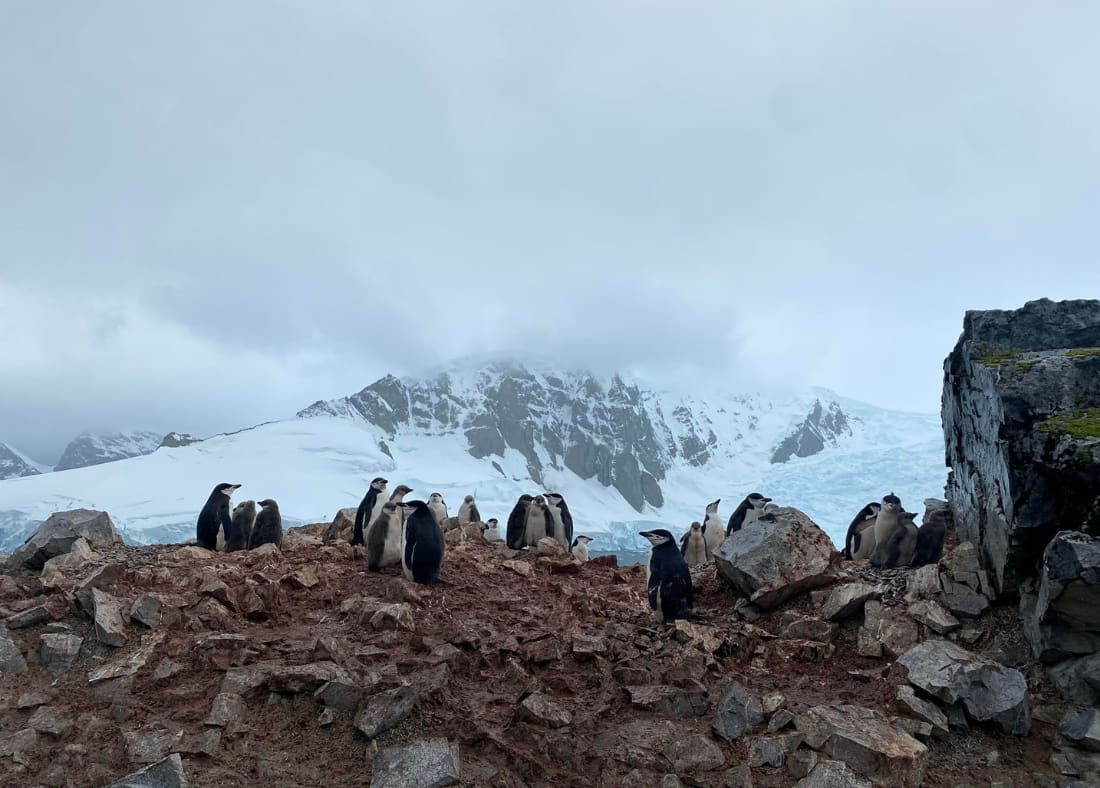
One moment I’ll never forget was finally seeing land after five days of nothing but rough water and swells. Seeing Antarctica sitting in the distance for the first time brought this huge feeling of relief that spread across the whole ship.
By the time we reached Antarctica, finally getting into calmer water and stepping onto land for the first time was euphoric.
After days of rough seas, exhaustion, and feeling constantly unsettled, just being able to stand still on solid ground again felt surreal. It was the most rewarding experience.
Ice
I genuinely don’t think photos can fully capture what Antarctica feels like when you’re actually standing there. After days of nothing but rough ocean, finally arriving somewhere so still almost felt unnatural.
The scale of everything completely messed with my sense of distance. Mountains that looked close were hours away. Glaciers looked frozen in time.
Antarctica didn’t feel dead though. It felt indifferent. Like a place that existed perfectly fine long before humans arrived, and would still feel grand without us.
Every morning I’d walk onto the deck to huge walls of ice, dark rock cutting through snow, floating blue ice, and light moving across the mountains in ways that made everything look painted.
I loved the penguins.
They’re like a civilisation of toddlers. Watching them jump around, carrying rocks, and somehow looking both awkward and determined at the same time was endlessly entertaining. They do smell horrible though.
Perspective
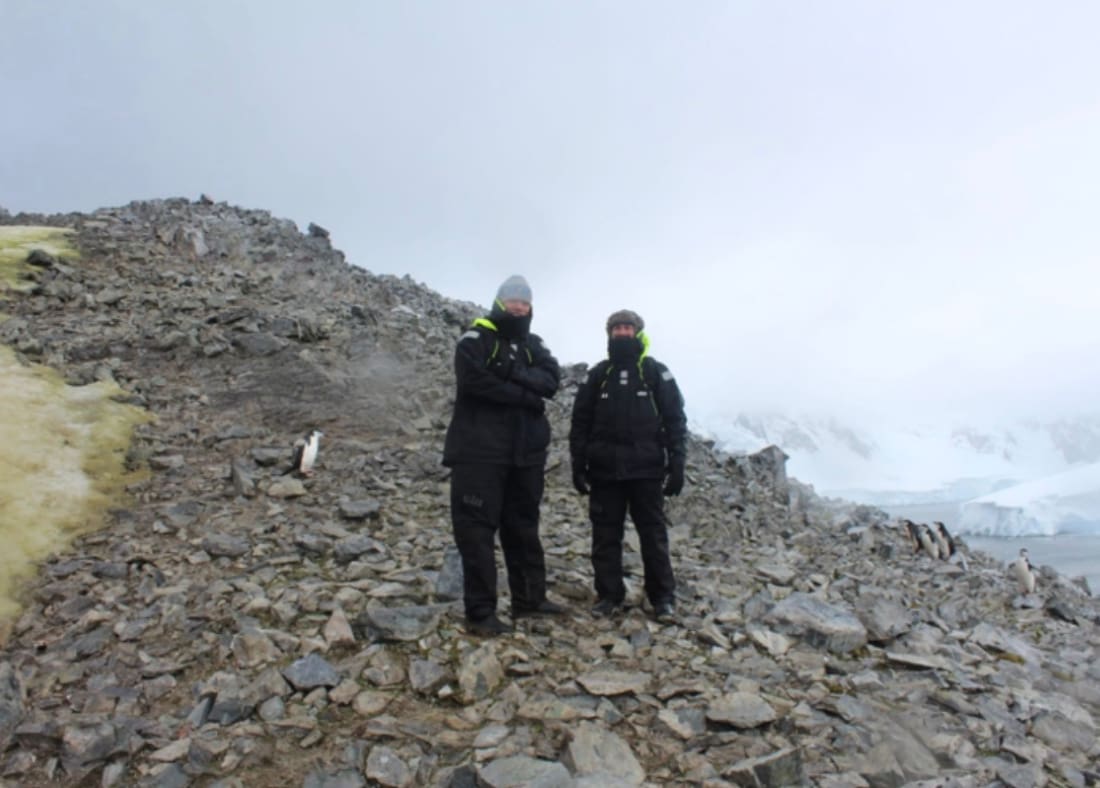
The landing that stayed with me most was our final one.
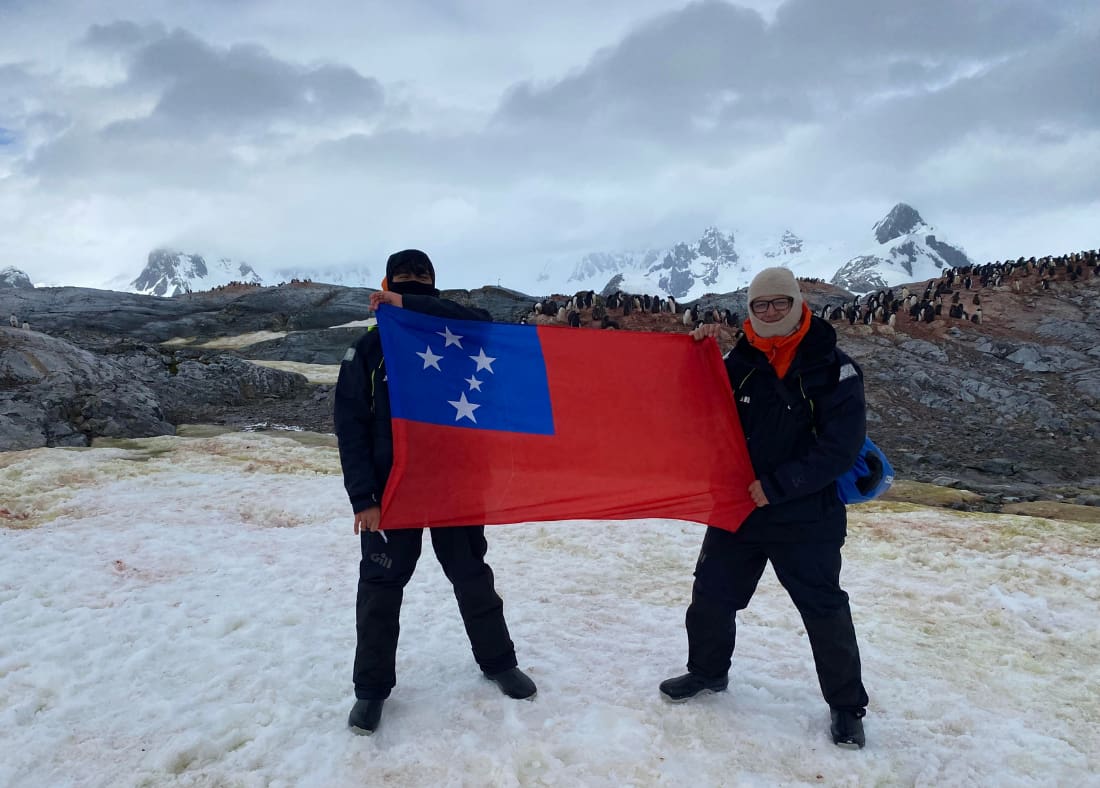
Hundreds of penguins had nested all the way at the top of this huge mountain we spent ages hiking up. Reaching the top and seeing them all sitting there in their nests, overlooking one of the most unreal views I’ve ever seen, felt hard to process.
That’s when everything really sunk in for me, where I was, how far from home I was, and how lucky I was to experience it.
At the same time, it made me realise how fragile places like Antarctica really are. Looking back, I can’t stop thinking about how lucky we were to experience it the way we did, because the Antarctica we saw may not exist in the same condition forever.
Exploration
Standing in one of the most remote places on earth with other Pasifika explorers was special, knowing our ancestors crossed oceans long before modern navigation existed.
The expedition also gave me a completely different respect for the early Antarctic explorers and sailors from that era. Standing in those conditions, even briefly, made me realise how much courage it must’ve taken to step into places that were truly unknown, with no certainty of what was ahead or whether you’d even make it home.
Looking back, it made exploration feel a lot more human to me. Being out there made me realise the people who came before us probably felt many of the same things we did, just on a much bigger scale.
Coming home
After spending weeks so far outside my normal life, I’m a lot more comfortable stepping into situations that feel uncomfortable. The things that once felt intimidating don’t feel quite as big anymore.
More than anything, it left me wanting more of the world. Antarctica used to feel completely out of reach to me, and I hope sharing my experience makes opportunities like this feel a little more possible for other people too.
Thank You
To the Antarctic Heritage Trust, the Inspiring Explorers™ programme, and the donors and supporters who made this possible, I honestly can’t put into words how grateful I am.
To my fellow Inspiring Explorers™, guides, and everyone who shared this journey with me, thank you. You all made this trip what it was.
A special thank you to Inspiring Explorers™ Programme Manager, Mike Barber, and our mentors Lawrence Rothwell, and Lisa Blair. I learnt a lot just from being around you all. The way you supported us, carried yourselves, and handled every situation throughout the voyage genuinely left a big impact on me.
I feel incredibly lucky to have shared this experience with all of you. I couldn’t have done it without the people around me. I can’t wait till the next reunion.
Thank you to our generous Inspiring Explorers™ Fund donors, expedition partner Spirit of Adventure Trust, sponsor Burnsco, and supporter Bark Europa.