Antarctic Peninsula Partnership

UKAHT

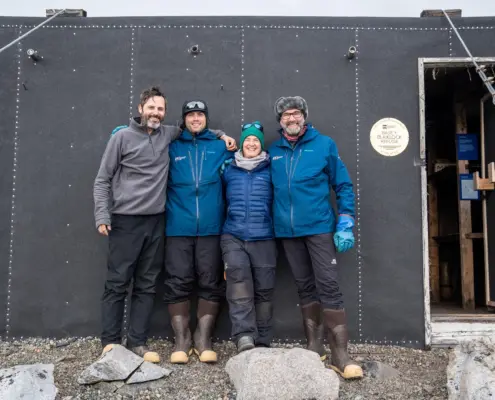
© Antarctic Heritage Trust - credit: Lizze Meek

In a partnership with sister organisation UK Antarctic Heritage Trust (UKAHT) launched in 2017, our team is supporting an extensive conservation programme of Britain’s heritage across multiple sites on the Antarctic Peninsula.

In 2016 our Programme Manager, Al Fastier, travelled to the UK to participate in a planning and health and safety training workshop with UKAHT. The workshop laid the foundation for the conservation work, which was undertaken in 2017 on the Antarctic Peninsula. This collaboration follows reciprocal visits over the 2014-2015 season, first by UKAHT Chief Executive Camilla Nichol to the Trust’s Ross Sea Island sites to view the conservation work achieved, followed by our Executive Director, Nigel Watson, viewing the Peninsula sites under UKAHT’s care.

This initiative was another step towards conserving the huts in a remote and remarkable region and the Trust is delighted to share with UKAHT its extensive knowledge around cold-climate conservation. The Trust’s experience conserving the early explorer bases at Ross Island involved staff developing innovative and detailed methodologies for treating artefacts in the world’s most extreme environment.

This project is part of the developing relationship between the two trusts, and follows on from a previous initiative in 2017, when Al assisted the UKAHT to complete a building survey of Hut Y, at Horseshoe Island on the Antarctic Peninsula. The team look forward to continuing this work with UKAHT in the coming seasons.

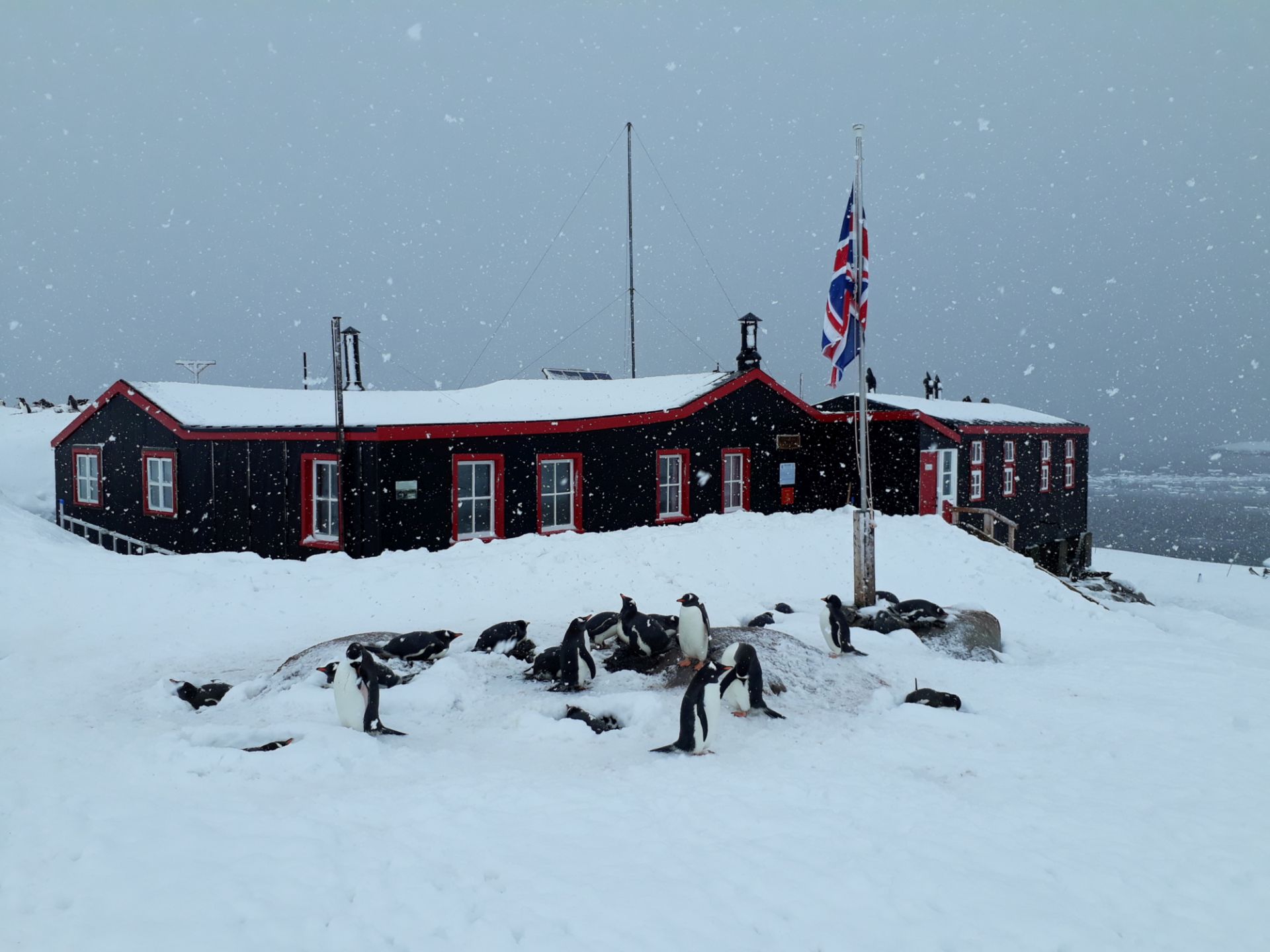
Base A at Port Lockroy in winter

Port Lockroy

UKAHT

During the 2018-19 summer Antarctic season, despite battling through one of the wettest seasons seen in the last two decades of work at Port Lockroy, with only five nonraining days out of 33, Al Fastier and the UKAHT conservation team had a very productive season completing the majority of the works scheduled. The project benefited greatly from having an enthusiastic, dedicated and experienced team.

The team conducted a full survey of the historic buildings at Base A and Damoy Hut to assess their conditions, with repairs made where necessary. A number of maintenance tasks were also completed, as well as product testing in order to be better informed for future conservation works at all of the historic huts within UKAHT’s care.

During the 2023-24 summer Antarctic season Al Fastier worked with the UKAHT team at Port Lockroy, spending a month conducting critical structural repairs to the roof of Base A and mentoring the UKAHT team to help build their capacity to carry out their long-term conservation programme.

Learn more about Port Lockroy at UKAHT’s website.

Horseshoe Island Hut

UKAHT

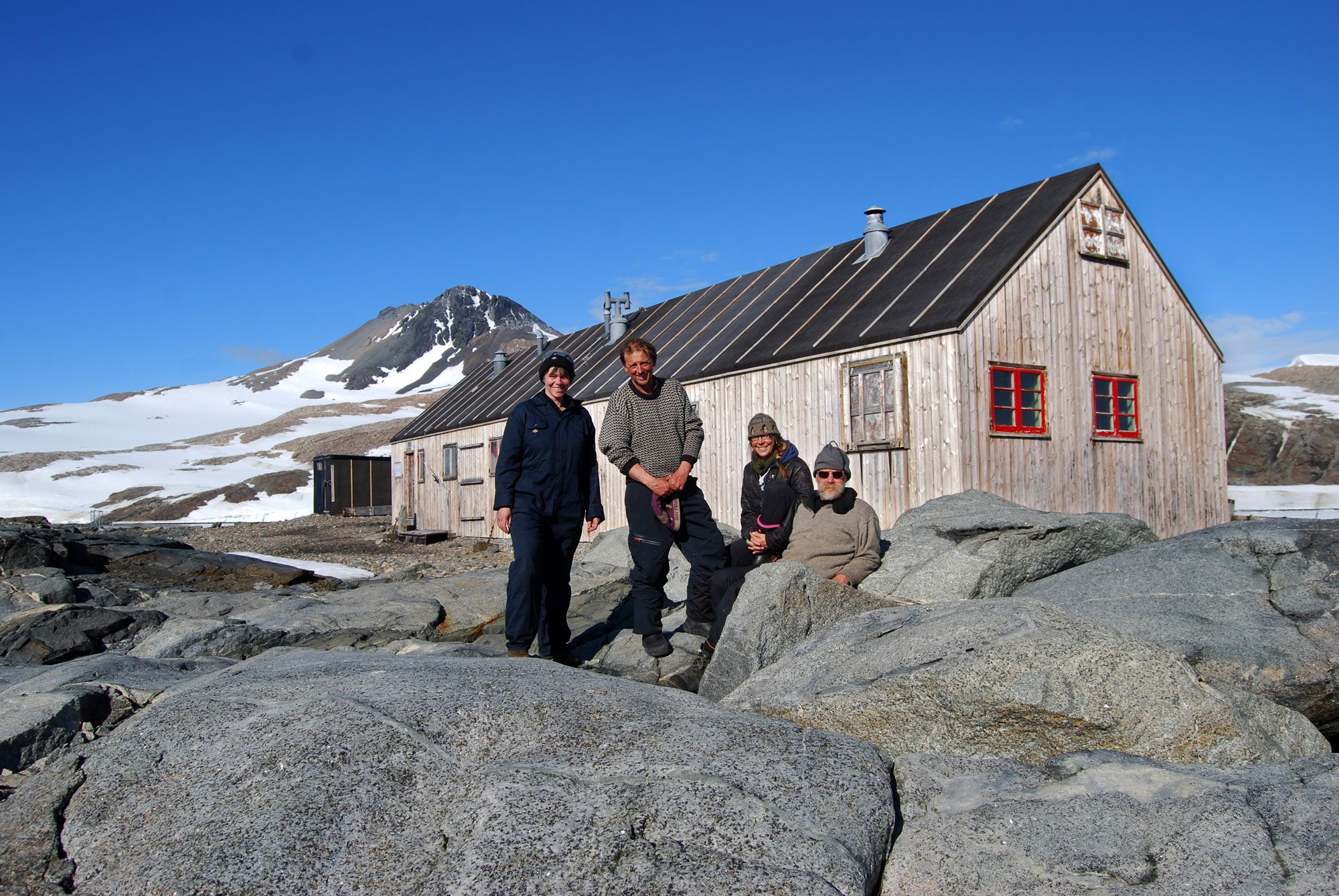
In 2016 Programme Manager Al Fastier was part of a UKAHT four-person team which spent a month on-site at Base Y, Marguerite Bay, Horseshoe Island, undertaking emergency repair work to the building and scheduling building and artefact work for future years.

The scientific base (1955-1960), now under UKAHT’s care, once conducted geology, meteorology and topographic survey research.

Learn more about Horseshoe Island at UKAHT’s website.

UKAHT team with Al Fastier (NZAHT) at the British Antarctic Survey Base Y, Horseshoe Island.

Stonington Island

UKAHT

In partnership with sister organisation, UK Antarctic Heritage Trust (UKAHT), our team has carried out a 14-week conservation programme at the historic bases on Stonington Island, off the Antarctic Peninsula.

This initiative was another step towards conserving the huts in a remote and remarkable region and is part of an ongoing partnership with UKAHT, announced in 2017, to support an extensive conservation programme of Britain’s heritage across multiple sites on the Antarctic Peninsula.

The Trust is delighted to share with UKAHT its extensive knowledge around cold-climate conservation. The Trust’s experience conserving the early explorer bases at Ross Island involved staff developing innovative and detailed methodologies for treating artefacts in the world’s most extreme environment.

From 1940–1974 Stonington Island was the site of operations for both the Americans and British, where they carried out significant survey work in the Peninsula region. During the season, the Trust’s Programme Manager, Al Fastier and the team completed a detailed conservation survey of the historic British scientific base hut, known as Base E, which was established in 1946. Partway through the season, Al departed and the Trust’s Programme Manager – Artefacts, Lizzie Meek joined the team.

The logistics to reach Stonington Island are challenging, and rely on the goodwill and strong relationships UKAHT has built up with the IAATO tour ship companies and British Royal Navy. It takes a week to travel there from either South America or the Falkland Islands, with landing reliant on good sea ice conditions at the time. Fortunately the conservation team was able to land safely, along with equipment and supplies for the intensive 14 weeks of surveying, artefact cataloguing and emergency repair work.

Their survey revealed the bulk of items to be conserved at Stonington are food tins and parts relating to the Lister generator set, which provided electricity for the base.

Conditions on the island were warmer, wetter and saltier than Ross Island, making it challenging for the preservation of artefacts. The buildings were often drenched in salt spray, hurled horizontally across the island by the infamous ‘Fumigator’ katabatic wind, which whirls down from the glacier at the top of the peninsula at speeds of up to 150kph. Although there were a number of similarities to working at the Ross Island huts, such as sleeping in tents, limited food, cold toes, snow and rusty tins, they reported some noticeable differences, including the diversity of wildlife, higher tourist numbers, and more modern building materials.

With its wild weather, rich wildlife and breathtaking views, the 750m long island remains a stunning and unique historic site. It has a constantly calving glacier in the adjacent bay, and shingle beaches occupied by Weddell, fur, crab-eater and leopard seals. Nesting Antarctic terns are constant, noisy companions, and later in the season a small collection of moulting Adélie penguins shelter among the rocky outcrops.

This project is part of the developing relationship between the two trusts, and follows on from a previous initiative in February 2017, when Al assisted the UKAHT to complete a building survey of Hut Y, at Horseshoe Island on the Antarctic Peninsula.

Learn more about Stonington Island Hut at UKAHT’s website.

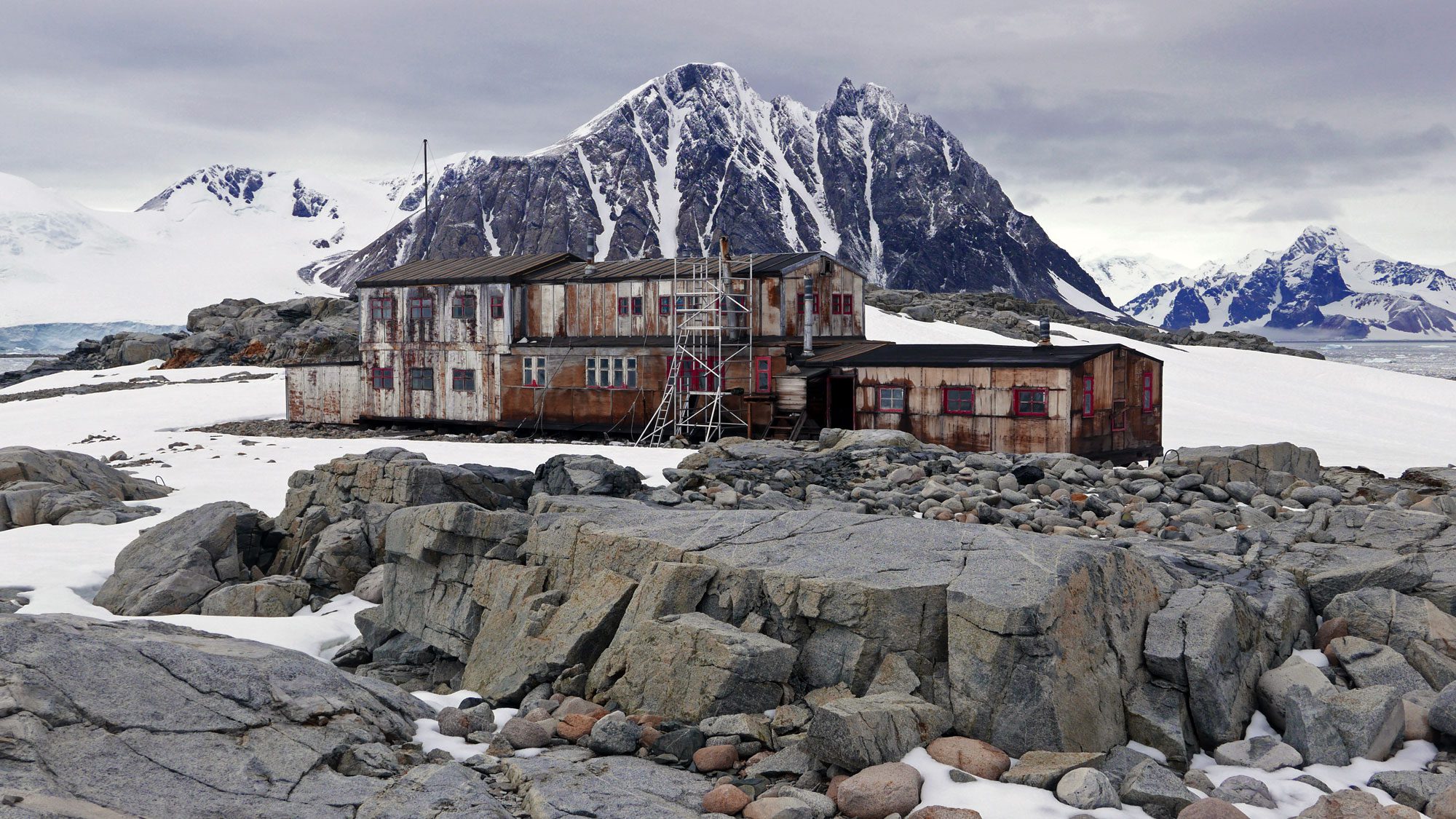
Base E, Stonington Island
Historic British scientific base hut, Base E, on Stonington Island.
Antarctic Heritage Trust

Antarctica Goes on Tour

, ,
Antarctic Heritage Trust and the UK Antarctic Heritage Trust are going on tour with two immersive virtual reality experiences to AUS and NZ.
Antarctic Heritage Trust

Expedition Blog – Josiah Tualamali’i, Antarctic Peninsula 2026

,
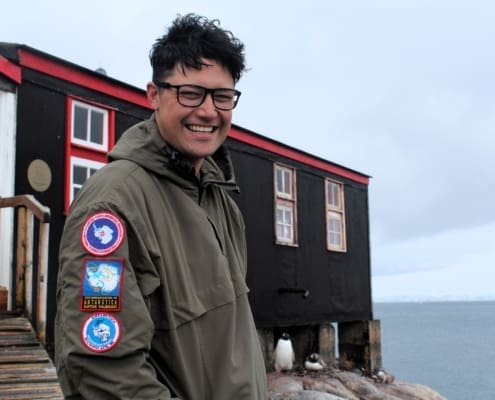
In this blog, Inspiring Explorer Josiah Tualamali’i shares his experience on the Trust's Inspiring Explorers Expedition™ Antarctic Peninsula 2026
Antarctic Heritage Trust

Success for Remote Conservation Project

, ,
An ambitious project in a particularly challenging environment has succeeded thanks to the long-term partnership between two organisations on opposite sides of the globe.