
Summer 2025-26 Conservation Season
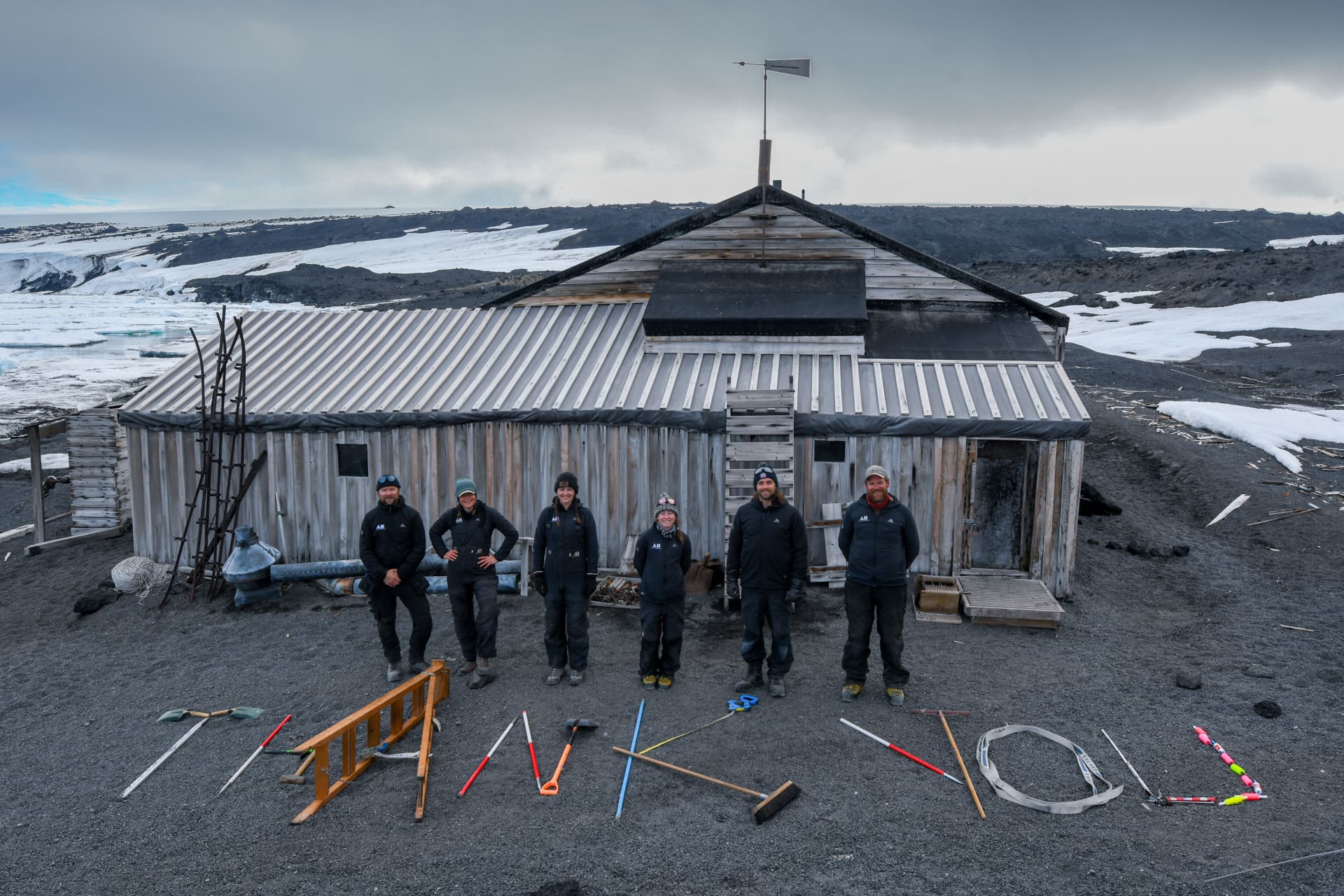
This season saw two teams of conservation specialists deploy to the Ross Sea Region of Antarctica to undertake critical work programmes at the historic huts of Scott, Shackleton, Borchgrevink, and Hillary. The season included exciting finds, site mapping, and a deep dive into the way each hut’s construction is affected by the local environment.
Archaeology
It was a team effort at Cape Evans, the site of Scott’s Terra Nova hut, to support the Trust’s archaeology programme during the second of two planned seasons.
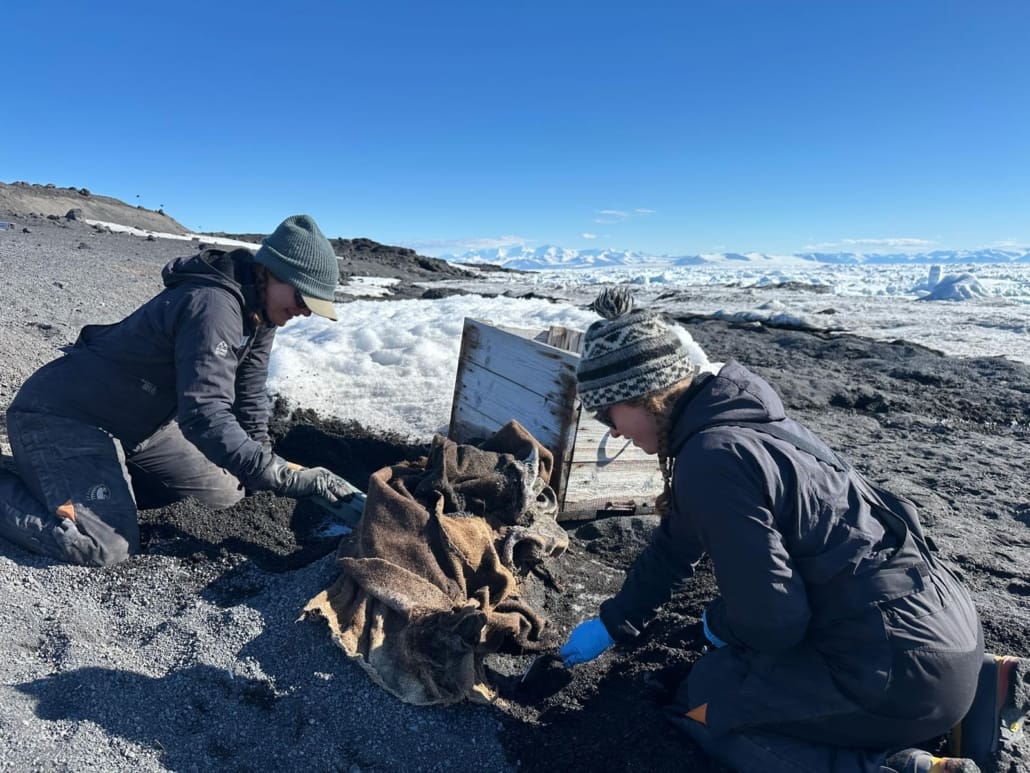
A key priority was excavating to record cultural material in areas along the shoreline, where it is increasingly at risk of being washed away. Some material was further assessed for conservation and collection, including a pony blanket that had slowly surfaced from the frozen ground over many years and had become vulnerable as seals frequently move through this area.
“The pony blanket was hand-quilted and still held pony hair, which holds future interest for researchers as well as making it obvious what this textile was for. Treatment involved ensuring the hair remained in place, and stabilising the stitching, before re-locating it inside the stables,” said Artefact Coordinator Shannah Rhynard-Geil.
Photographic developers used by Herbert Ponting, photographer on the British Antarctic Terra Nova Expedition (1910-1913) were also excavated.
The team then completed the most detailed heritage survey of the hut environment to date. Using new differential GPS technology, they mapped the broader cultural landscape and built a spatial data set supported by comprehensive photographic and written documentation.
Archaeologist Emma St Pierre says the team also set up a new monitoring programme for items most at risk, particularly those with high levels of organic material.
“Establishing these monitoring sites gives us a crucial baseline for understanding how environmental change is influencing the broader cultural heritage around the huts. The environment surrounding these huts is central to what makes this place so extraordinary. The extent of cultural material here and the level of preservation is remarkable,” said Emma.
Unearthing a Link to Scott’s Expedition
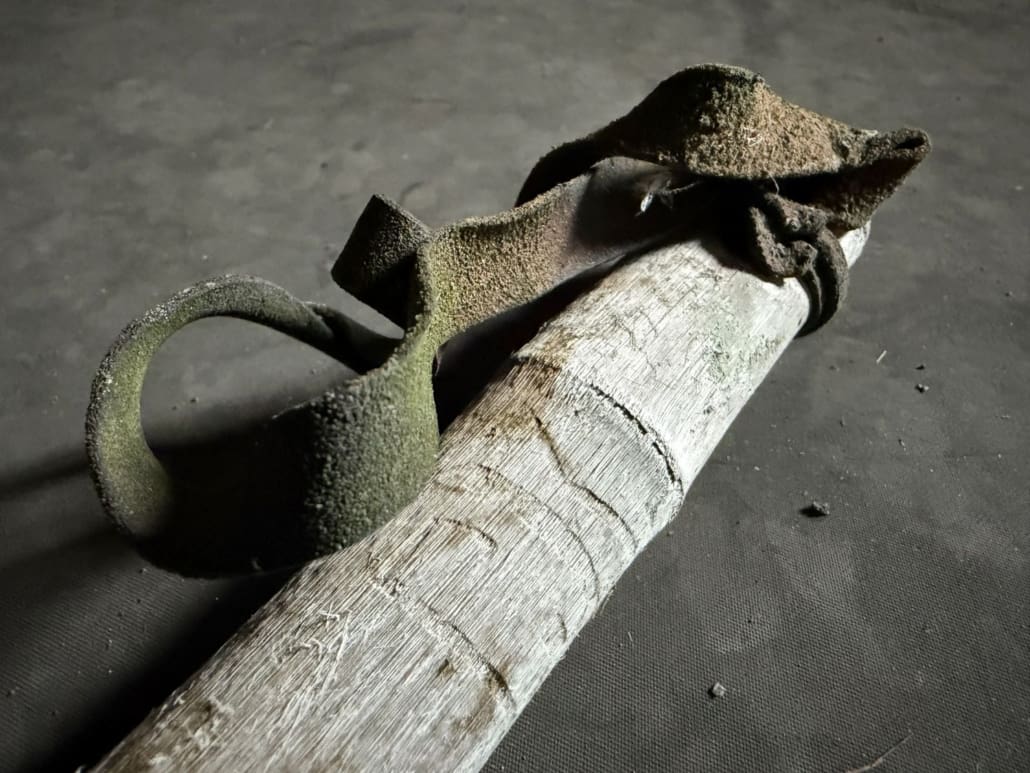
One of the most remarkable discoveries from the archaeology survey at Cape Evans emerged when Archaeologist Emma St Pierre uncovered a ski pole with hand carved initials on them, belonging to Patrick Keohane, a Petty Officer on Scott’s Terra Nova expedition.
“Finding this ski pole was the highlight of my season on the Ice. It is rare to uncover an item that can be directly linked to an individual, so this felt incredibly special. To find it amongst all the bamboo scattered around the site was a real moment. Thinking that this pole may have been used during Scott’s journey to the Pole is both exciting and deeply meaningful,” said Emma.
Patrick Keohane was one of several Irishmen selected by Captain Robert Falcon Scott for the British Antarctic Terra Nova expedition (1910-1913), and one of 15 men chosen to set out with Scott from their Cape Evans base on the 900-mile journey to the South Pole.
Keohane initially assisted with the ponies before moving into the man hauling sled teams once the ponies had been put down. Although disappointed to be turned back 350 miles short of the Pole, this decision ultimately saved his life, as the small polar party that continued sadly never returned. Keohane later joined the search party that found the bodies of Scott, Dr Edward Wilson and Lieutenant Henry Bowers in their tent.
Keohane’s ski pole has been stabilised for interim storage and will be scheduled for conservation work in the upcoming season.
Looking Deeper
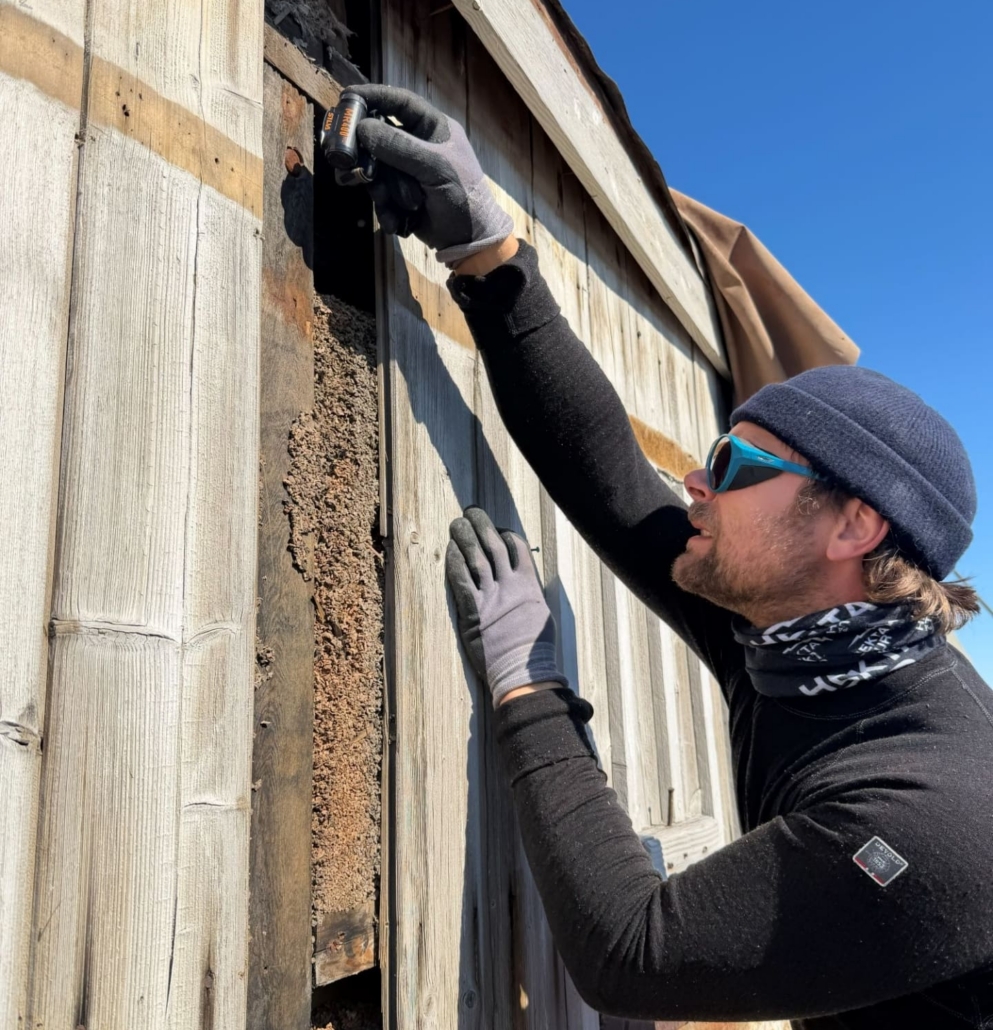
Structural investigations and building health assessments at Shackleton’s Nimrod hut at Cape Royds and Scott’s Terra Nova hut at Cape Evans helped the team understand how each structure is responding to the environment and where targeted intervention may be needed. A small camera probe allowed conservators to see inside the walls, enabling them to plan for future works to roof and walls.
At Cape Evans, the programme included conditioning the stables roof with a protective bitumen layer to strengthen the cladding and improve its durability. Inside the stables, stabilisation mats were installed to reduce gravel movement and airborne dust created by foot traffic, to reduce the impact of dust-exacerbated mould and corrosion.
At Hillary’s TAE/IGY hut several artefacts were repatriated to the hut after being donated to the Trust, including a map, clothing, bags, tents and food tins.
Regular annual monitoring continued at all sites, further strengthening the Trust’s long running data set.
Building Capability
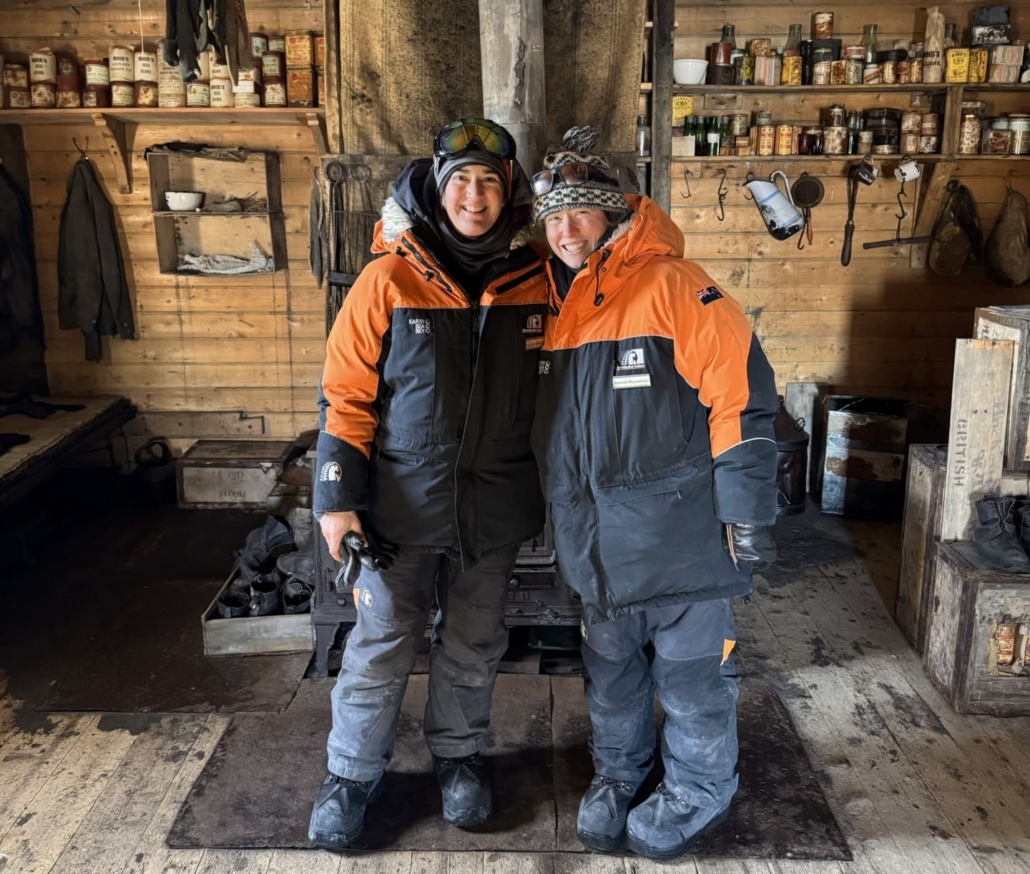
A central focus going into the season was succession planning to ensure the Trust can continue safeguarding Antarctica’s remarkable cultural heritage well into the future. Sharing knowledge with a wider group and strengthening the pool of skilled heritage specialists is vital to this work.
As part of this, Heritage Manager Lizzie Meek mentored Artefact Coordinator Shannah Rhynard Geil through field life, establishing field camps, and further developing conservation skills on the Ice.
“Lizzie has such a broad range of knowledge and extensive experience in Antarctica. To learn from her was a very special experience,” said Shannah.
Artefact Coordinator Shannah and Field Team Lead Zack Bennett enjoyed introducing new team mates this season, including Heritage Building Conservators Dale Perrin from the United Kingdom, Martin Herrmann from the Netherlands, and Conservator Margot Murray from Australia. The Trust values the conservation, fieldwork, and extreme climate experience each of them brought to the team.
Collecting Critical Data to Protect Cape Adare’s Historic Sites
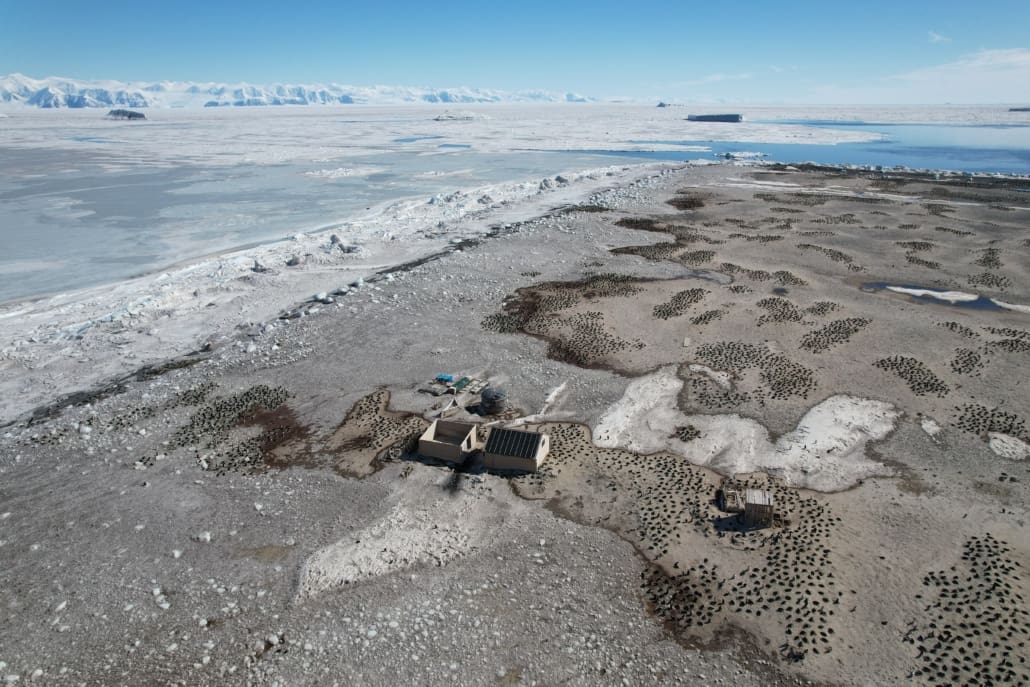
Earlier in the season, a team of three successfully collected critical data at Cape Adare to support the upcoming multi-year conservation programme for Borchgrevink’s hut, Scott’s Northern Party hut, and Hanson’s Grave.
Borchgrevink’s hut is the only Antarctic explorer base yet to receive major conservation work, largely due to its extremely remote location. The site is remarkable not only for its role in the early exploration of Antarctica, but also as the only surviving example of humanity’s first building on any continent.
Event Lead Gord Macdonald, Antarctica New Zealand Field Safety Officer Doug Henderson, and Architect Field Support Lucy Hayes-Stevenson worked together to assess both the environment and the historic structures. With only a short weather window available, the team achieved an impressive amount of progress.
Key achievements included capturing aerial photogrammetry using drones, completing the first laser scanning and survey of the huts and surrounding environment since 1972, and a full review of infrastructure and stored materials at the field camp established to support the Trust’s conservation work.
“We were able to carry out an hour of Remotely Piloted Aircraft System flight time across Cape Adare, capturing high-quality digital images and completing the first aerial photogrammetry of Carsten Borchgrevink’s hut, Scott’s Northern Party hut, and their surrounding environment,” said Gord Macdonald.
The condition of both Borchgrevink’s hut and Scott’s Northern Party hut was closely examined. The team assessed the structures and the materials held on site to inform future conservation work.
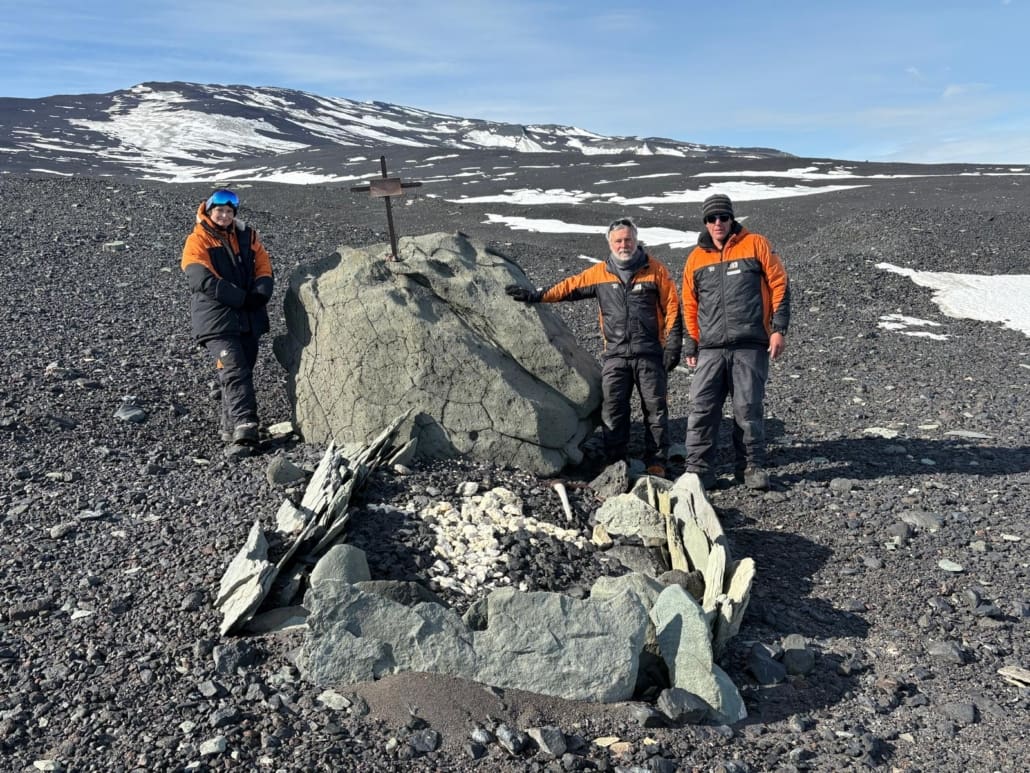
Another major achievement was a full condition assessment of Nicolai Hanson’s grave, the first since 2003. Hanson is believed to be the first person to have died on the Antarctic continent and the first to be buried there. Using digital recording techniques, the team created a detailed three-dimensional model of the site, providing a clear record of its current condition.
The findings gathered during this season will support the finalisation of the Trust’s revised Conservation Management Plan.
Reaching Cape Adare requires complex logistics and significant international collaboration. The Trust is grateful to Antarctica New Zealand, the Italian Antarctic Program, and the United States Antarctic Program for their support.
Major conservation at Cape Adare will be happening in future seasons. If you would like to help ensure this historic site is conserved for future generations, please consider supporting our work.
The Trust’s drone operations are permitted through the New Zealand Ministry of Foreign Affairs and Trade in collaboration with Antarctica New Zealand and the United States Antarctic Program.