Expedition Blog – Eliza McCracken, Antarctic Peninsula 2026
Living Life at an Angle
As a tall ship sailor, the opportunity to sail to Antarctica on the historic tall ship Bark EUROPA is something many dream of, with the adventure of crossing the notorious Drake Passage to one of the most remote places in the world.
I first learnt about the Antarctic Heritage Trust’s Inspiring Explorers™ programme in my final year at the University of Canterbury. Having completed Antarctic Studies as a paper in the first year of my Bachelor of Science, majoring in Geology and Geography, I was fascinated by this amazing continent – its climate, geology, glaciology, and history. How I went from a land-based degree to sailing full-time as a Second Mate at the Spirit of Adventure Trust is a different story. And no, I did not get press-ganged like sailors traditionally did.
It wasn’t until I met three alumni of the Inspiring Explorers™ programme, Lawrence Rothwell, Kaitlyn Martin, and Charlie Thomas, through my work at the Spirit of Adventure Trust, that I truly understood its impacts. I heard their stories, adventures, and the connections they had made. What stood out to me was how strongly Antarctic Heritage Trust lives its kaupapa (values) of an Explorer’s Mindset and the importance of curiosity, resilience, teamwork, leadership, and innovation. These are values which align closely with me and the work I do at Spirit. It is so important to live the Kaupapa (values) we encourage in others.
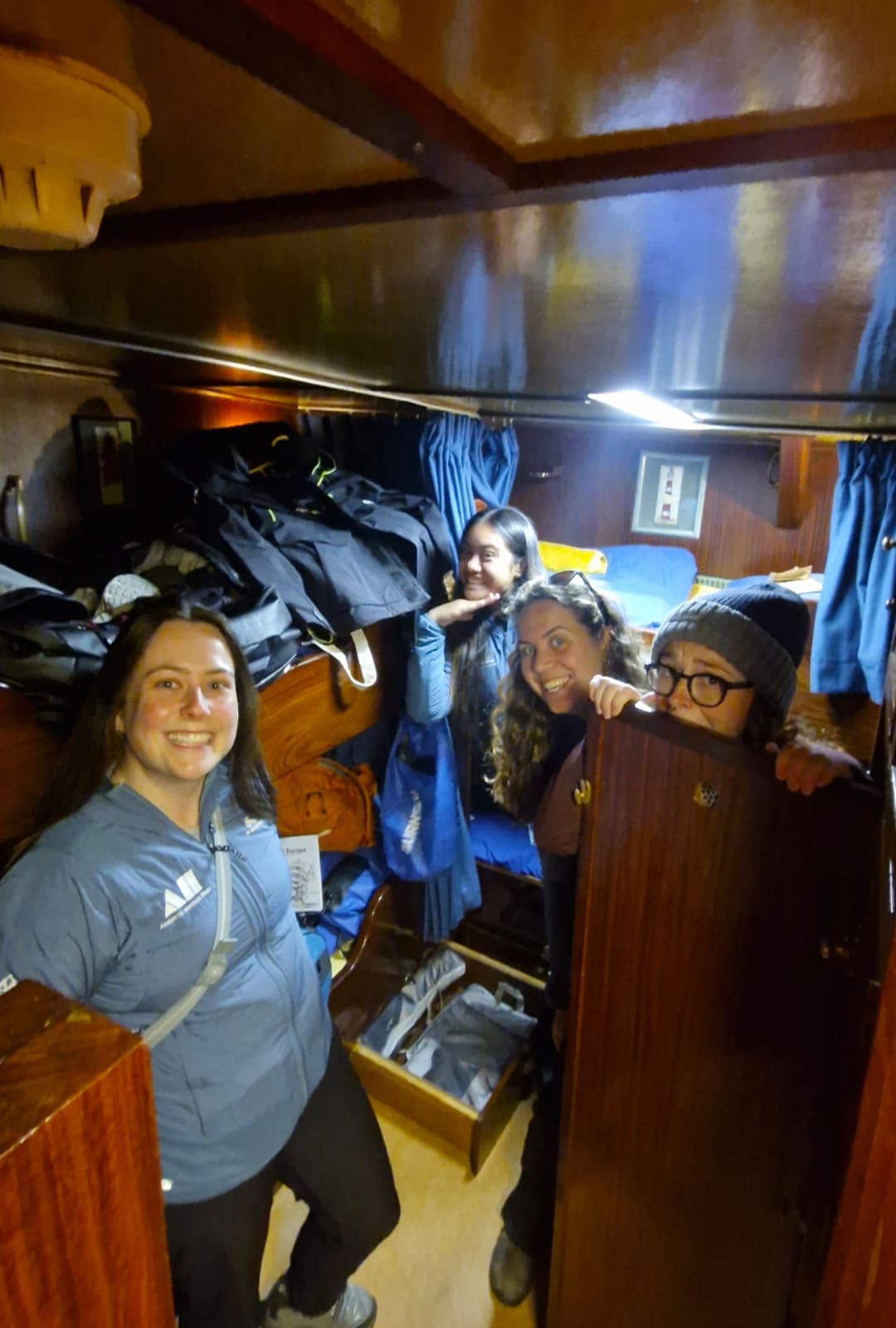
Stepping on board the EUROPA, I had an advantage over my fellow Inspiring Explorers™. I understood life at sea, the cramped spaces, watch systems, and the challenge of fitting your life into tiny drawers. Only this time it was with people from all over the world and a variety of ages, instead of the usual 16–19-year-old rangatahi (youth) from Aotearoa!
However, this experience only deepened my admiration for my fellow Inspiring Explorers™. To step into a whole new world, sailing a tall ship across the Drake Passage, is an impressive feat of bravery and courage. They showed true resilience and teamwork, bringing laughter, energy, and mana to everything they did. They carried forward the legacy of the Antarctic heroic-age explorers, not always sure what they were getting into, but embracing it fully, nonetheless.
The sheer power of te taiao (the environment) really pushed me outside my comfort zone. The further south you sail, the more intense and unforgiving the elements become. As sailors, we talk about the ‘Roaring Forties,’ the ‘Furious Fifties,’ and then the ‘Screaming Sixties’ – latitudes where the wind circles the globe uninterrupted. Watching the moana (ocean) temperature drop from 10.2˚C to 1.0˚C as you cross into polar waters on a tall ship is hard to describe. You are not just observing the elements; you are living in them.
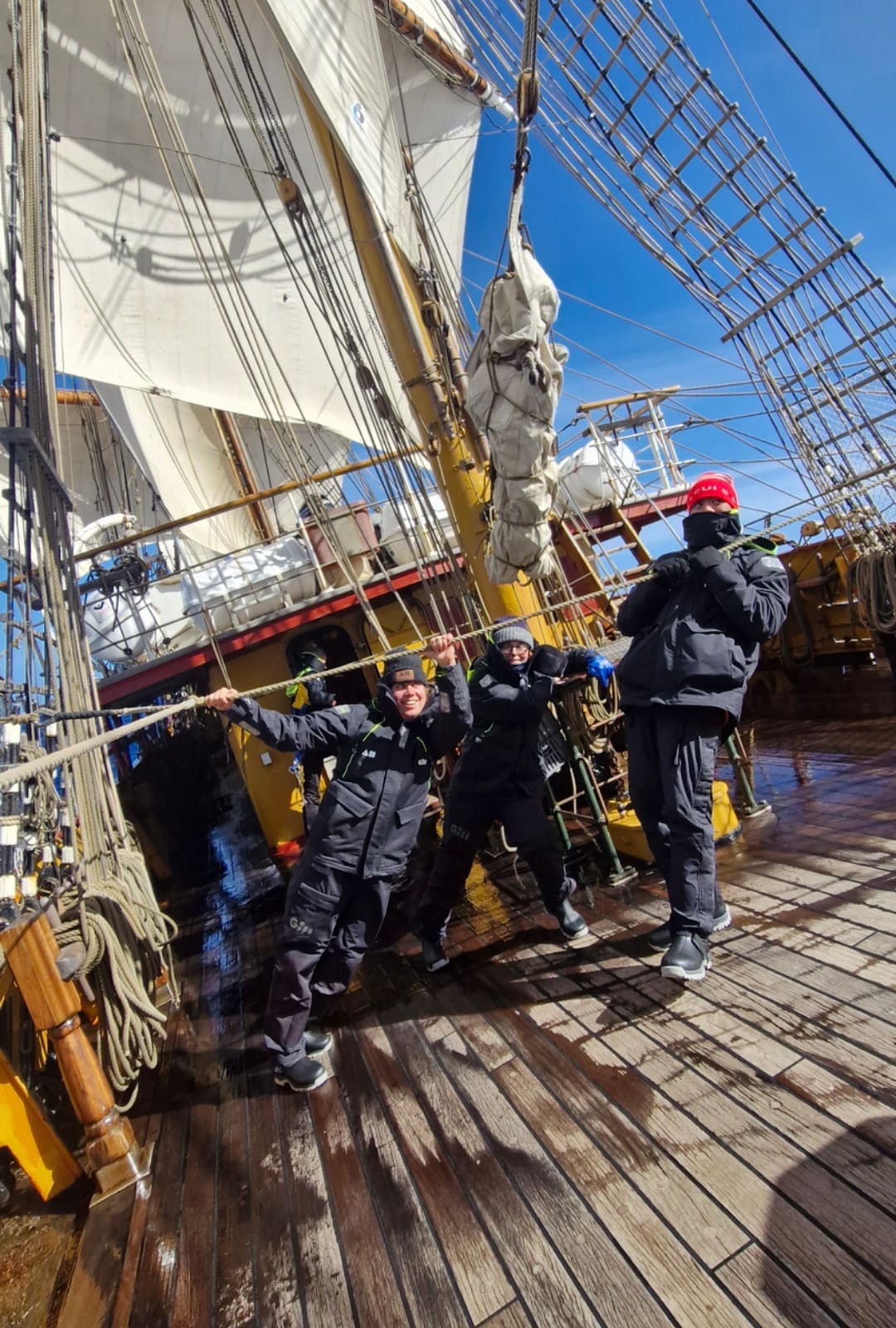
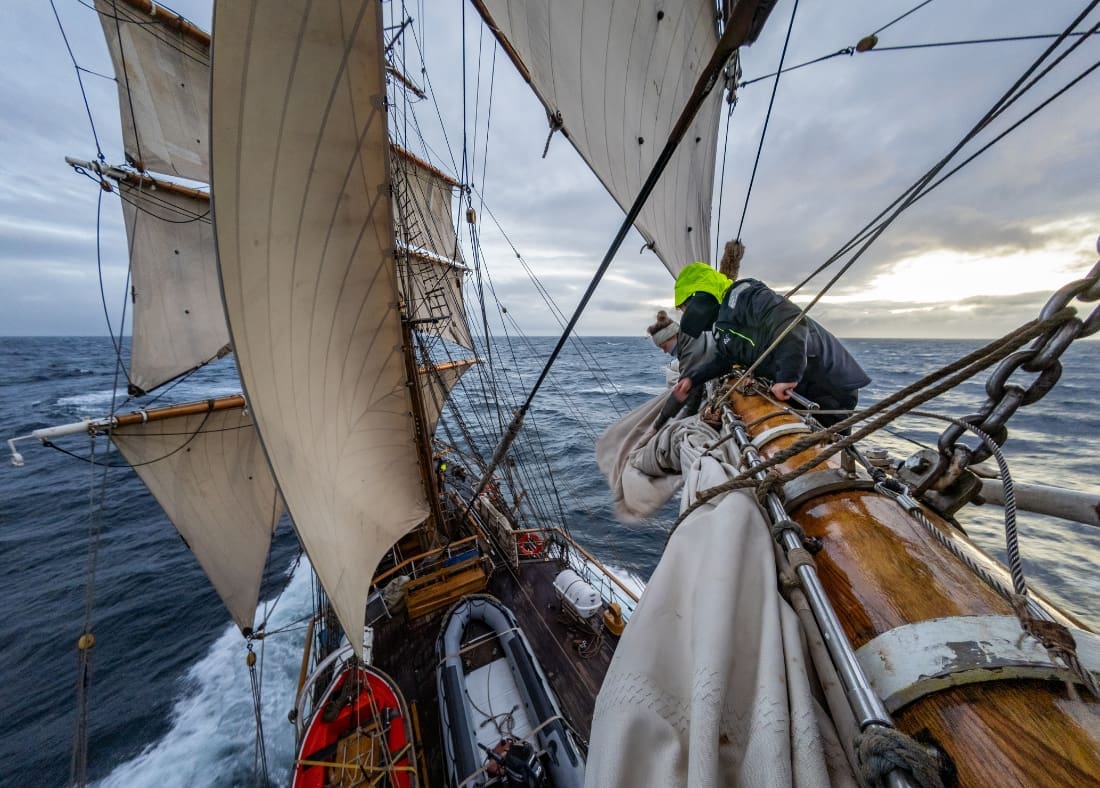
You are living life on an angle; the ship tilted under the power of the sails aloft, heeling to such an extent that water sloshes over the deck. Putting your socks on results in you sliding to the other side of the cabin. It is almost comical getting dressed in such conditions, let alone trying to eat a meal as your food rolls off your plate.
Hauling lines demands timing with the motion of the ship, always braced and alert. The wind pelts your face, the salt water from the rolling seas grabs at your seaboots, and the cold bites your toes and fingers. Sometimes the water temperature is more inviting than the air temperature. It is physically and mentally exhausting, but it also makes you feel unbelievably alive.
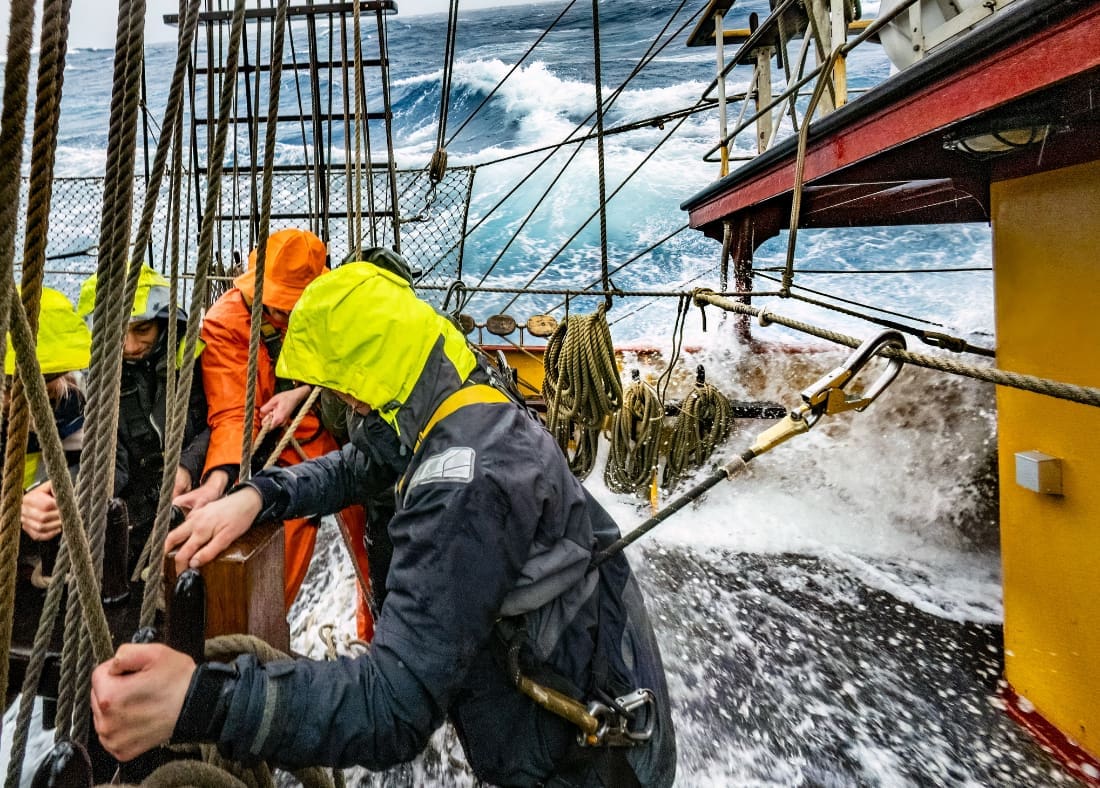
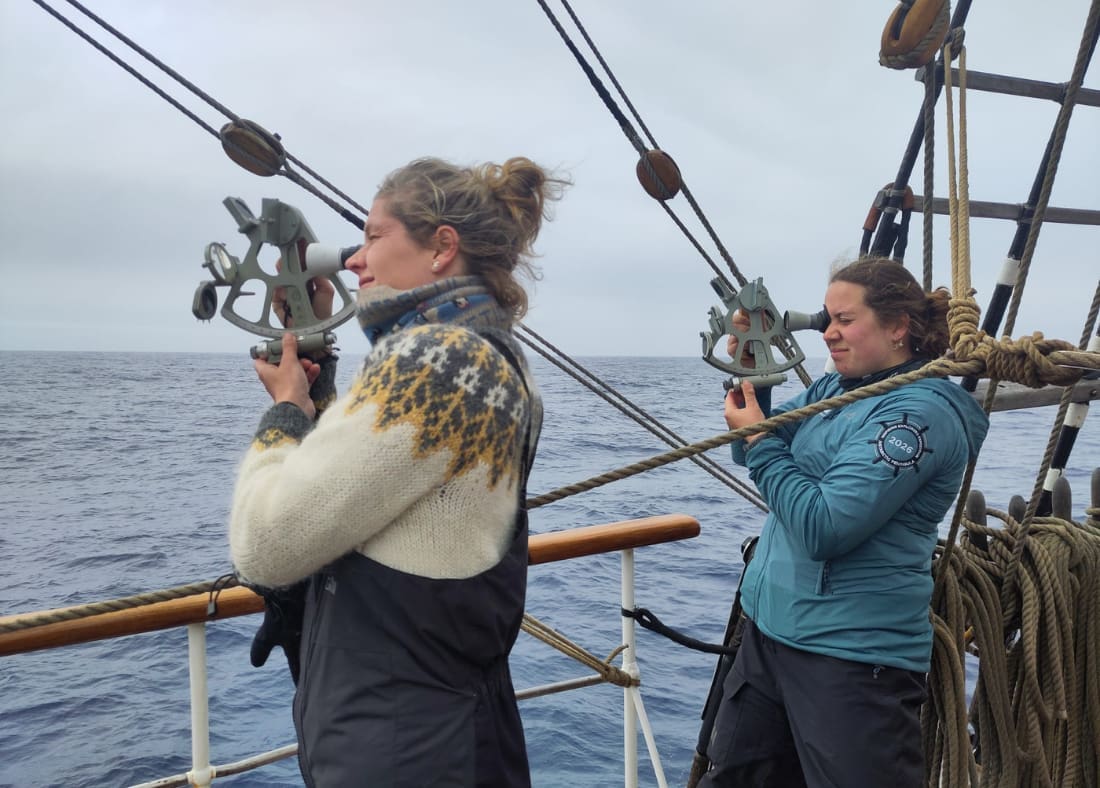
Onboard Spirit, I am the navigator and medical officer, so I came wanting to learn from the EUROPA crew. They were phenomenal – moving through the rigging with such grace and ease you almost forgot that you were in six-metre seas and howling winds. They worked tirelessly, repairing sails and teaching us seamanship. I learnt a lot from the Second Mate, Clara, including how to take a noon sight with a sextant to calculate latitude. It required patience and precision as you ‘bring the sun down to the horizon’ – especially on a rolling, freezing ship.
Just like Frank Worsley on his voyage of the James Caird, we rarely saw the sun over those 19 days! It really struck me how much patience, resilience, and navigational knowledge early explorers would have needed. Navigating to and around Antarctica was a huge test of trust in their knowledge and skills. Nowadays, we are lucky to have GPS, satellite imaging, and daily weather forecasting to support accurate positioning and help us understand the dynamic environment we are in. It makes navigating this challenging te taiao (environment) easier and more accessible.
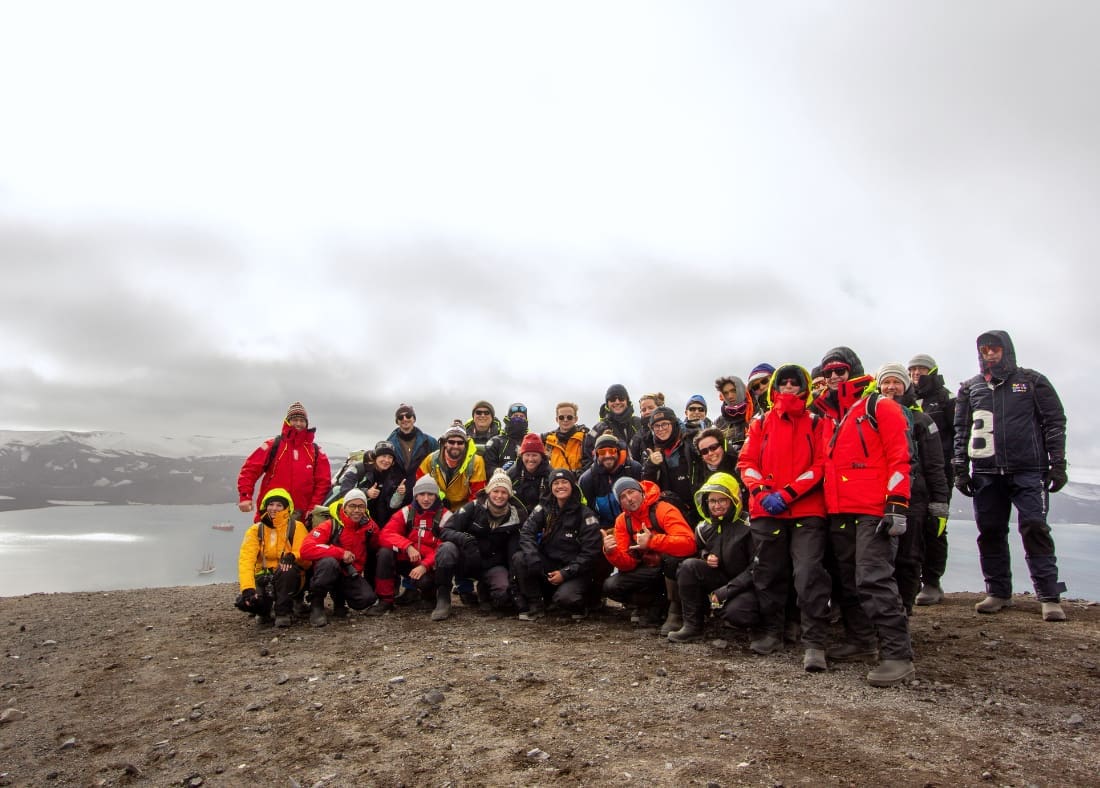
What resonated most between Spirit and EUROPA was the sense of community. Both ships foster environments where everyone belongs, regardless of background. Sailing a tall ship demands teamwork – hauling ropes, keeping lookout, helming the vessel and working aloft, all require trust and responsibility. There is something really unique about sailing a tall ship and how quickly whanaungatanga (connection) forms – strangers become shipmates, and shipmates become friends. We were fortunate to sail with 58 people from around the world, including Americans, South Africans, Dutch, Germans, Australians, and more!
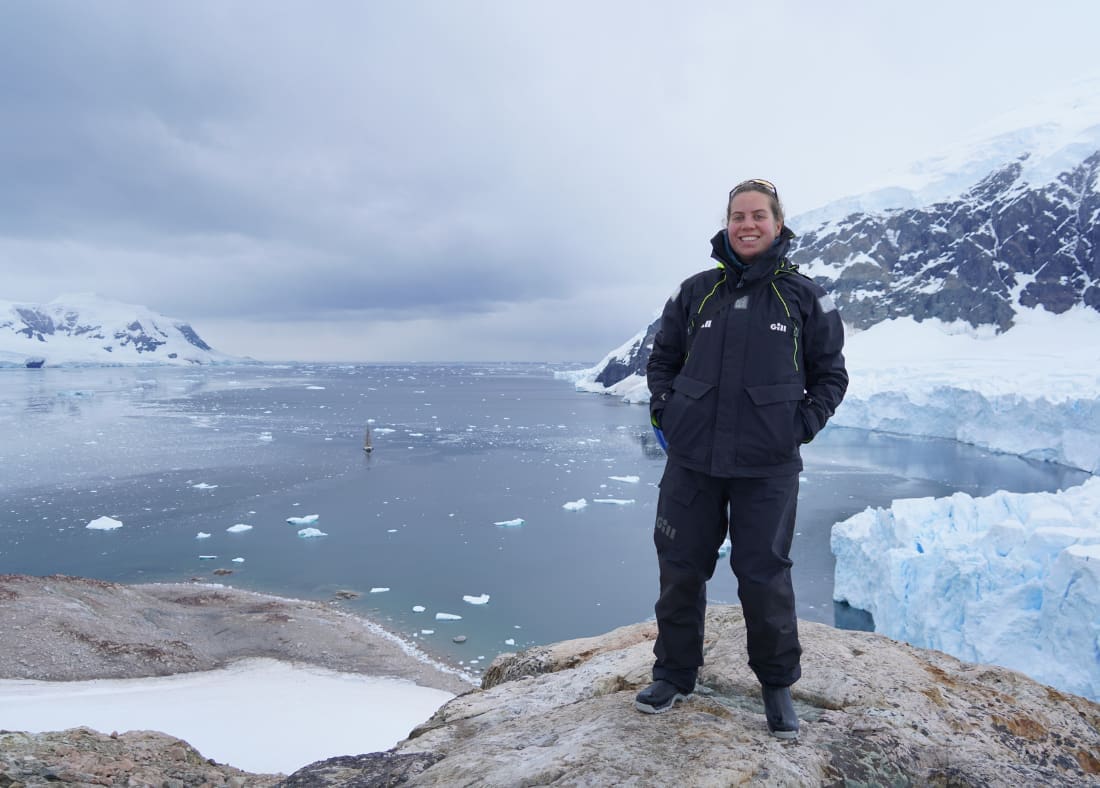
After five days of exhilarating sailing, we finally made it to Antarctica. Te taiao (the environment) tests you with its intensity and remoteness, but it leaves you wanting more. Every glacier we walked past, every penguin highway crossed, every crack of the ice echoing across the landscape – it was mesmerising, magical, and an absolute privilege. This place deserves every ounce of protection we can give it.
I cannot thank the donors to this expedition enough. You have helped provide an opportunity for 18–30-year-olds like myself to grow as individuals while becoming kaitiaki (guardians) of this incredible continent.
To the team from Antarctic Heritage Trust, especially Inspiring Explorers Programme Manager, Mike Barber, and our mentors Lawrence Rothwell, and Lisa Blair – you guys do amazing, inspirational mahi (work). You have created an expedition of a lifetime for us and we are forever grateful.
To our sponsors, Burnsco – thank you for keeping us protected from the powerful te taiao (environment) of the Southern Ocean and Antarctica. The early explorers endured it without such gear; we were fortunate not to.
To our expedition partners, Spirit of Adventure Trust – thank you for continuing to create opportunities for myself and the rangatahi (youth) I work with. I look forward to future collaborations with Antarctic Heritage Trust.
To Rotary Club of Cashmere, Lions Club of Rangiora, the Rotary Club of Kaiapoi/Belfast, and my friends and family, thank you for your continuous support. It is deeply appreciated, and I look forward to sharing this expedition with my communities.
Finally, to my fellow Inspiring Explorers – thank you for bringing your authentic selves to this expedition. You made the tough times easier and the funny moments funnier. I am proud to have shared this journey with such an inspiring group of people – couldn’t imagine greater souls.
Eliza McCracken
Inspiring Explorer
Thank you to our generous Inspiring Explorers™ Fund donors, expedition partner Spirit of Adventure Trust, sponsor Burnsco, and supporter Bark Europa.