Expedition Blog – Libby Manning, Antarctic Peninsula 2026
Sailors and Seabirds
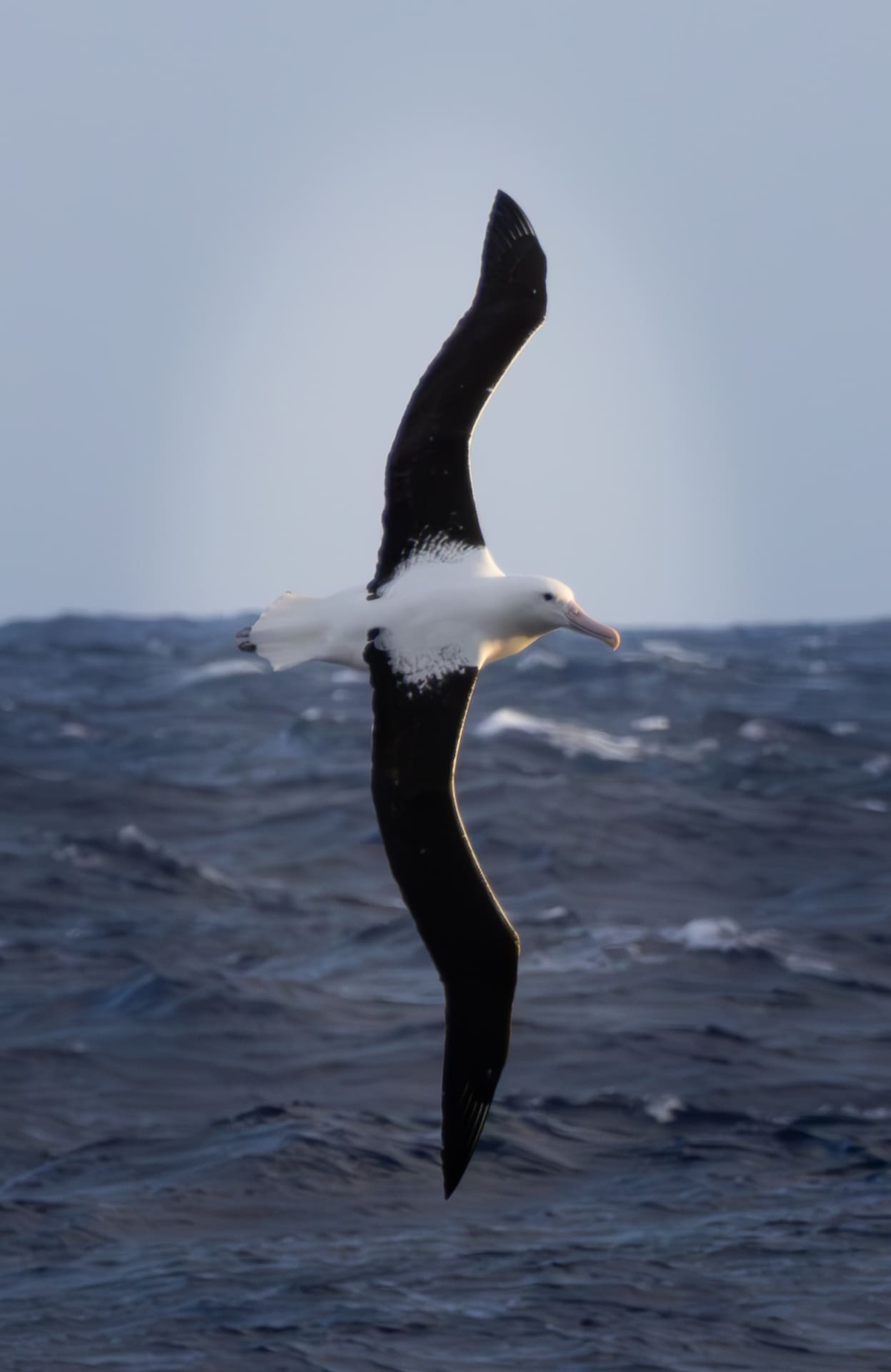
I’ve always been a wildlife fanatic but living in Ōtepoti Dunedin (NZ) I have come to realise just how AMAZING albatross are.
Ōtepoti happens to be home to a very special colony of Northern Royal albatross, and for the past two years I have been privileged to work at the Royal Albatross Centre as a guide and educator. Each year, over the course of eight months, albatross chicks grow from awkward, tiny handfuls to majestic, feathered giants. Then one day, without warning, they leave. They head east, towards South America and don’t return home for the next four to five years.
No goodbye. No note. Called by the sea to become true ocean explorers.
Sailors and seafaring explorers have always felt connected to the albatross. Many sailors perceive them as friendly navigators that lead ships safely home, others see them as the souls of dead seamen who roam the ocean in the afterlife. There is no doubt that heroic-era explorers such as Captain Robert Falcon Scott and Sir Ernest Shackleton encountered many-a-tross on their expeditions to the white continent.
This connection between albatross and explorers has always mystified me, and when I saw the advertisement for the 2026 Inspiring Explorers Expedition™ sailing onboard the Bark EUROPA, there was no doubt in my mind that I had to apply.
I was at work when the Antarctic Heritage Trust’s Inspiring Explorers™ Programme Manager, Mike Barber, called me to ask how I’d feel sailing to Antarctica with the albatross. Concerned co-workers were watching me pace behind glass doors, holding my phone to my ear with a shaky iron grip. When I emerged with tears streaming down my face, I don’t think anybody knew whether to offer congratulations or condolences.
Bark EUROPA
The Bark EUROPA is a three-masted barquentine built in 1911– in the midst of the heroic age of Antarctic exploration. While she was never sailed by explorers such as Scott and Shackleton, her three-masted design bears an uncanny resemblance to the likes of the Endurance and other polar exploration vessels of the time.
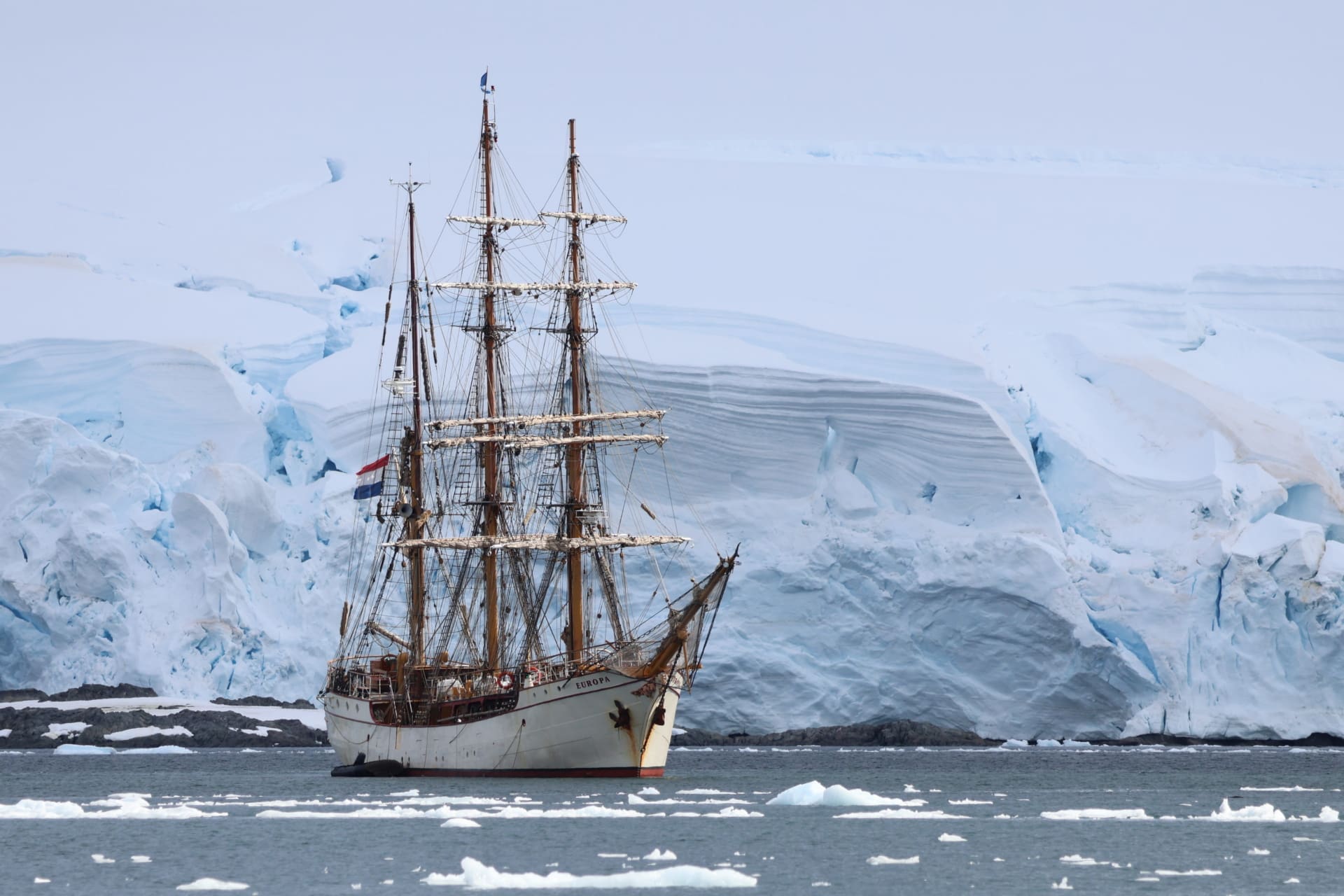
When I first saw her docked in the port of Ushuaia, I was instantly filled with a giddy, childlike sense of wonder – it was like I was looking at a real-life pirate ship. As I looked around the port, my giddyness began to turn to nervousness. I was starting to realise how much the Bark EUROPA was dwarfed by the massive cruise ships of the modern era. I stomached my fears and thought about the journey ahead. There was no way I was turning back now. Before I knew it, the ship was undocked, and we were on our way to Antarctica.
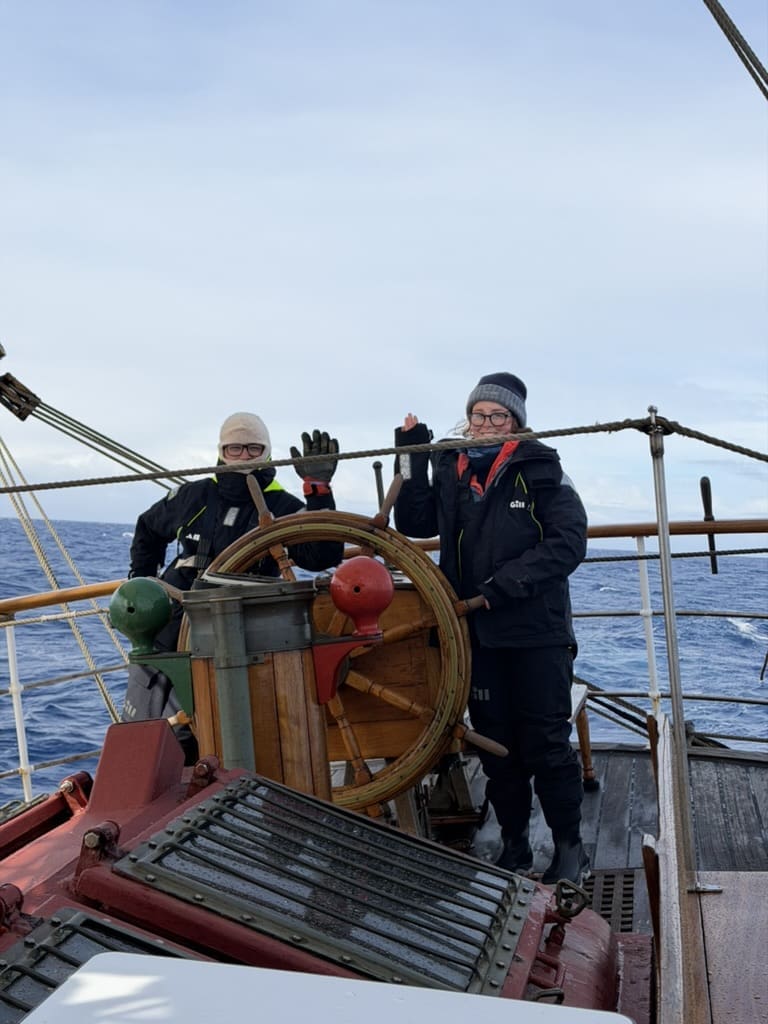
Our first day aboard was spent learning the ropes as we voyaged through the Beagle Channel. As the Bark EUROPA entered the open ocean, winds picked up, sails were set, and we settled into our watch systems. Four hours on, eight hours off.
Living under a watch system didn’t give me too much time to think about anything outside of eating, sleeping, and watching. You quickly become accustomed to endless horizons, living on an angle, and the sight of people carrying around little yellow buckets.
Life became incredibly simple. All that existed was our ship, our crew, and the occasional curious seabird soaring alongside the Bark EUROPA. Albatross, petrels, even a pair of porpoising penguins! Here, in the vast expanse of one of the wildest oceans, they were thriving, but I was struggling to stay on my feet amongst six metre swells. I wish I could have taken to the skies and joined them, but somebody had to man the helm!
Then, after four days at sea, I was standing on the deck and looking at something I thought I would never see; the faint outline of a mountain. Snow and rock ascended from the ocean into a ceiling of misty ocean fog. A large group of Cape petrels danced on the swells with ease. I was getting my first glimpse of Antarctica.
Yalour Islands
I could easily write another blog post about my experiences in Antarctica, but there is one landing that I cannot bear to leave out: the Adélie penguin rookery on the Yalour Islands.
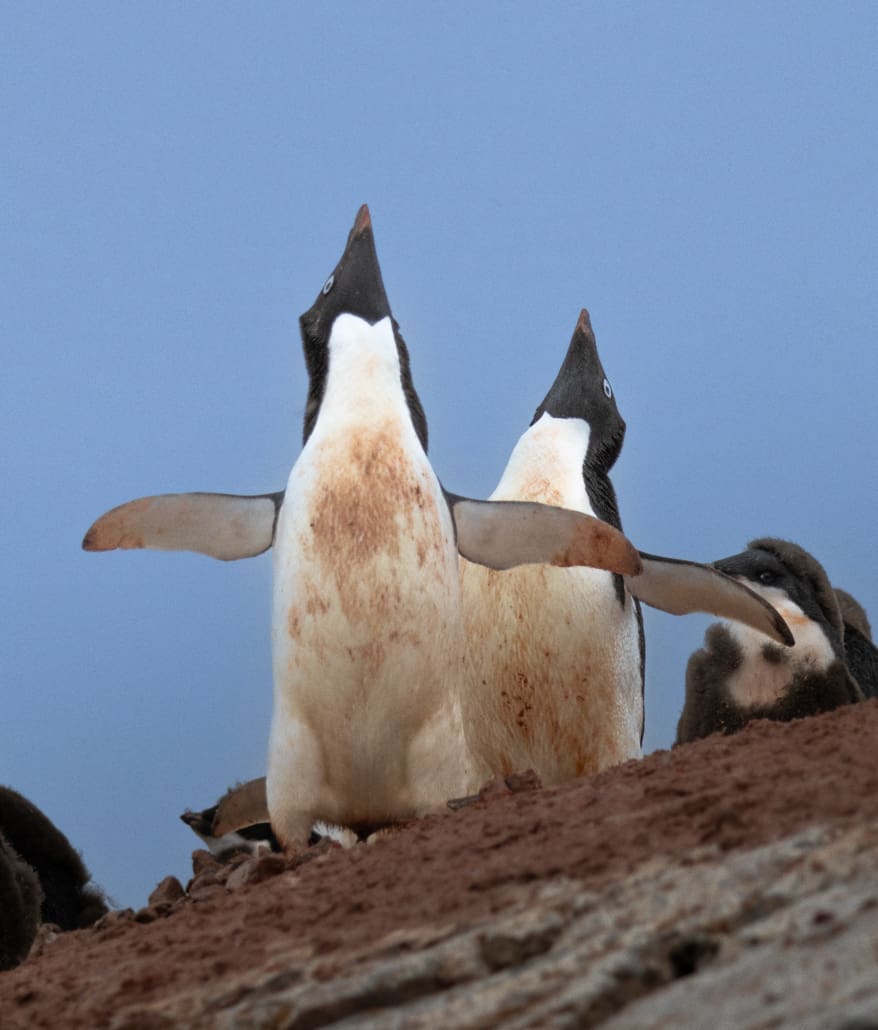
Adélie penguins are the smallest of any Antarctic penguin species, and they 100 percent have small dog energy. Hundreds of penguins sat in groups guarding stone nests covered with penguin poo, dyed red by their krill-rich diet. Parents tottered up and down highways carved out in the snow, every so often flopping onto their bellies and zooming into the distance like a feathery toboggan.
I was already in seabird heaven when a rare, pure white Southern Giant petrel began to circle above the rookery.
Giant petrels – affectionately known as nellies, stinkers, and stinkpots – are close relatives of the albatross. However, because they have ‘aggressive tendencies’ (and probably because they like to eat penguins) they don’t always have the best reputation. I don’t know how to accurately convey just HOW COOL it was to see this bird. I have been lucky to see many giant petrels in New Zealand and South America, but this bird was by far the most stunning individual I had ever seen.
I tried my best to stay calm, but I was very much like a giddy schoolgirl watching this petrel loop around the rookery. Just when I thought it couldn’t get better it swung past us, stuck out its big webbed feet, and landed in the snow several metres in front of us.
I would be reasonably confident in saying that I spent at least half of this landing on the brink of tears (if not actually crying). Never in my wildest dreams had I imagined I would be standing in Antarctica and taking in these amazing views first-hand. Now, every giant petrel I see transports me back to that moment in time – something I will always treasure and never forget.

Voyaging Home
Compared to our initial journey to Antarctica, sailing back to Ushuaia was a very different experience. Sailing through the Drake Passage and experiencing Antarctica together had bonded our crew like steel. It was hard to imagine three weeks ago most of us had been complete strangers. Additionally, we had become much more accustomed to sailing. Don’t get me wrong; many people were still afflicted with seasickness, but life was no longer restricted to eating, sleeping and watching. We took time to attend educational lectures, play card games, and take in the endless horizon on the ocean.
One night, towards the end of a 20:00–24:00 watch, we saw the stars for the first time since we had crossed into Antarctic waters. Bobbing along in the darkness, stars spanned the vast reaches of the southern sky above us. Amongst the constellations, the Southern Cross and its two pointer stars were luring us south again. It was as if I was looking into the night sky for the first time in my life.
On our final night sailing the Drake Passage we began to approach Cape Horn.
Cape Horn is known as a rough and treacherous region which has claimed the lives of many unfortunate sailors – but it’s also an albatross hotspot. Strong winds and productive, nutrient-rich waters make it a popular area to see large numbers of albatross. It did not disappoint.
Wandering albatross with chocolate feathers zig-zagged across the rolling waves, occasionally dipping the tip of their wings into the ocean as if they were testing the freezing temperatures. Every so often their curiosity would get the better of them, and they would closely hover past the stern of the Bark EUROPA – voyaging so close that you could look them in the eye and see yourself reflected back.
Alongside the wanderers were the familiar sights of Royal albatross. Just like me, they had grown up halfway across the world in Aotearoa and found themselves in the waters of the Drake Passage.
What were the chances I had seen these birds before, in a different time and place?
It’s INSANE to think some of the albatross I saw that day could have come from the Taiaroa Head colony in Ōtepoti Dunedin. Although I’ll never know for sure, 9,000km away from Aotearoa New Zealand, it felt like I was home again.
I sat on the deck of the Bark EUROPA until it got dark, shedding silent tears of amazement and reflecting on what had been the most incredible journey of my life.
Looking back
Not a day goes by where I don’t miss the swell of the ocean, the sting of the wind, and the comradery of the Inspiring Explorers™ team. Antarctica and its surrounding oceans are becoming increasingly under threat from pollution, unsustainable fishing practices, and anthropogenic climate change. This expedition has reinforced to me the importance of protecting these vulnerable ecosystems, and I hope that future generations will get the opportunity to explore these spaces like I have.
To Mike Barber and our mentors, Lawrence Rothwell and Lisa Blair – thank you for your never-ending support and guidance, not just as mentors but as friends. I know I speak for the entire Inspiring Explorers™ team when I say your support and encouragement has meant the world to us.
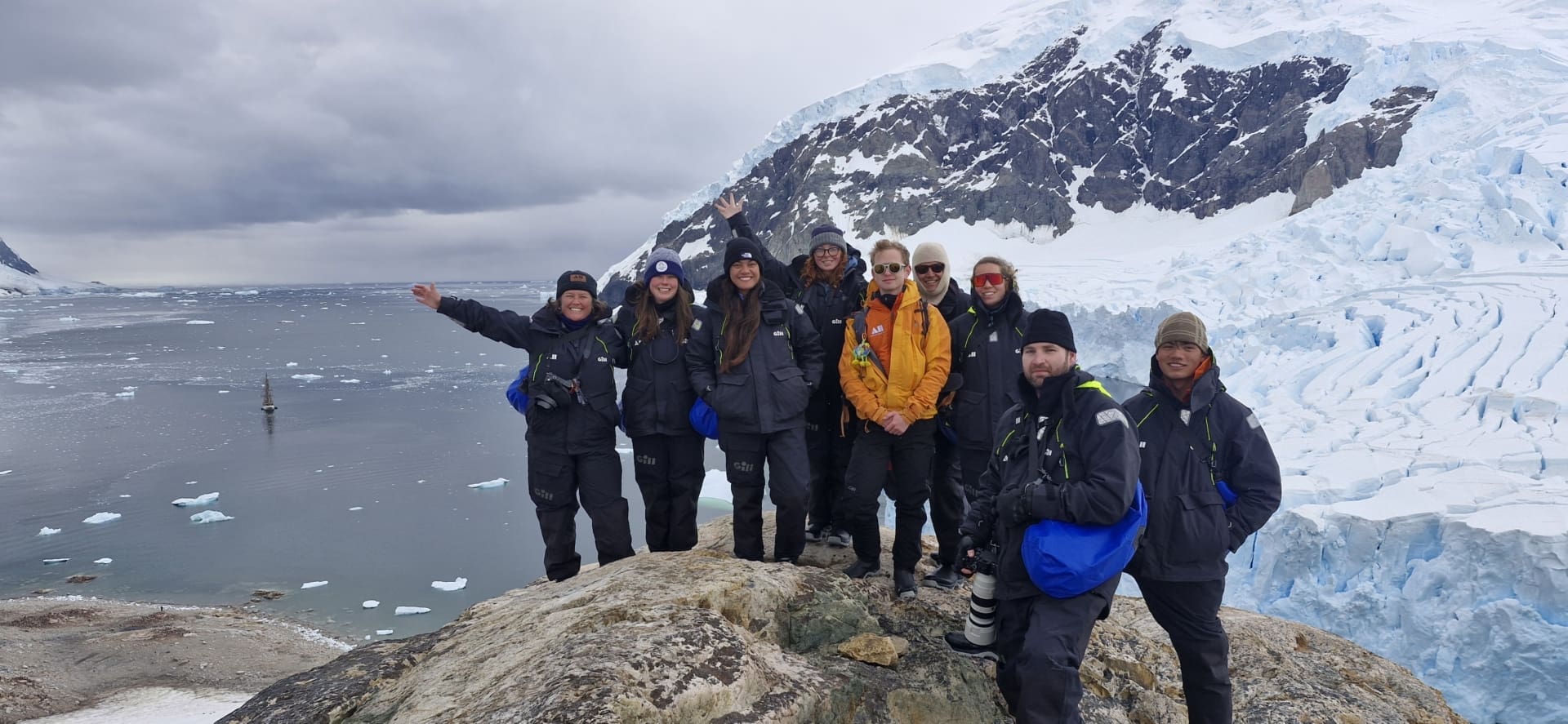
To my fellow Inspiring Explorers™, Precious, Margot, Matt, Meleki, Josiah, Sam, and Eliza – you’ve been the best pirate crew a bird-loving landlubber like me could ask for. Antarctic Heritage Trust could not have picked a better group of inspirational individuals. I can’t wait to follow your journeys in the future, and I am counting the days until we meet up again!
To the Antarctic Heritage Trust and their donors – these life-changing expeditions could not happen without you. Thank you so much for your generosity and for making dreams come true.
And to anybody else still reading – vote Albatross for Bird of the Year 2026!
Thank you to our generous Inspiring Explorers™ Fund donors, expedition partner Spirit of Adventure Trust, sponsor Burnsco, and supporter Bark Europa.