Next Generation Charts the Heroic Era

The Drake Passage made its power known, revealing the resilience that defined the heroic era of Antarctic exploration.
A group of eight young Kiwis stepped into the world of heroic era exploration as they sailed on an historic tall ship to one of the most remote places on Earth – the Antarctic Peninsula – with the Trust’s Inspiring Explorers™ programme.
The team included Margot Martin-Babin (28), Precious Tupou (18), and Eliza McCracken (23) from Auckland. Josiah Tualamali’i (30) and Sam Dunlay (28) from Christchurch, Matthew Lynch (26) and Meleki Schuster (21) from Wellington, and Libby Manning (24) from Dunedin.
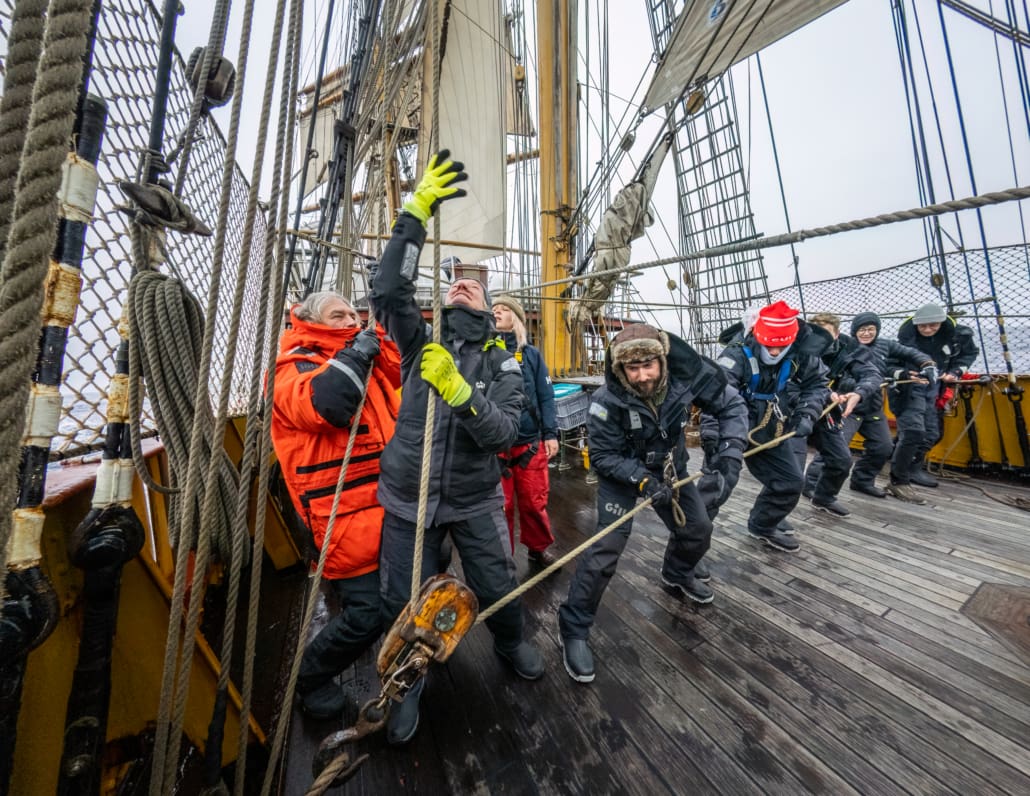
This was the first expedition of its kind for the Trust. The team took the helm, handled the sails, stood watch, and learned about traditional navigation aboard the three-masted tall ship Bark EUROPA. Built in 1911, she was similar in age to the ships that carried legendary Antarctic explorers Robert Falcon Scott and Sir Ernest Shackleton south on their expeditions.
The journey began in Ushuaia, Argentina before sailing across the infamous Drake Passage, experiencing the full force of a ‘Drake Shake’ with swells reaching more than six metres.
“The Drake Passage pushed me far outside my comfort zone, testing me mentally and physically, but your mindset changes everything. Leaning into the chaos and staying positive turned it into one of the most memorable parts of the trip,” said Inspiring Explorer Meleki Schuster.
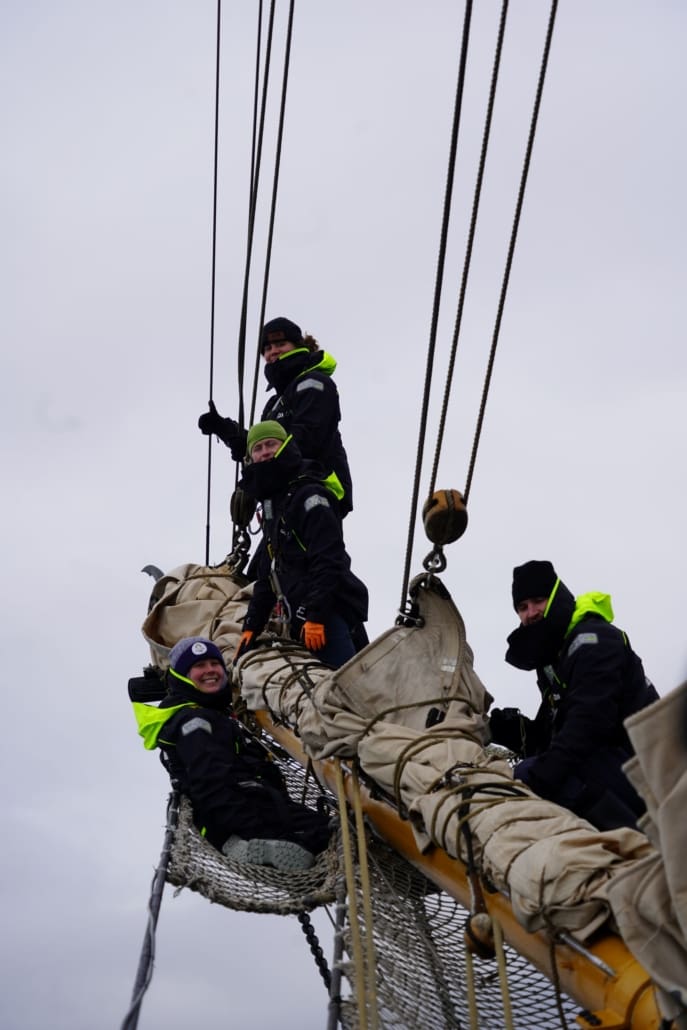
During the four-day crossing the team rotated across three watches, completing four hour shifts on with eight hours off while the ship rolled and tilted.
“In the Drake there were days when getting to tomorrow felt like its own test. I learned, as Amundsen led, to focus on what is possible each day and to keep some energy in reserve for the unexpected. It made all the difference,” said Inspiring Explorer Josiah Tualamali’i.
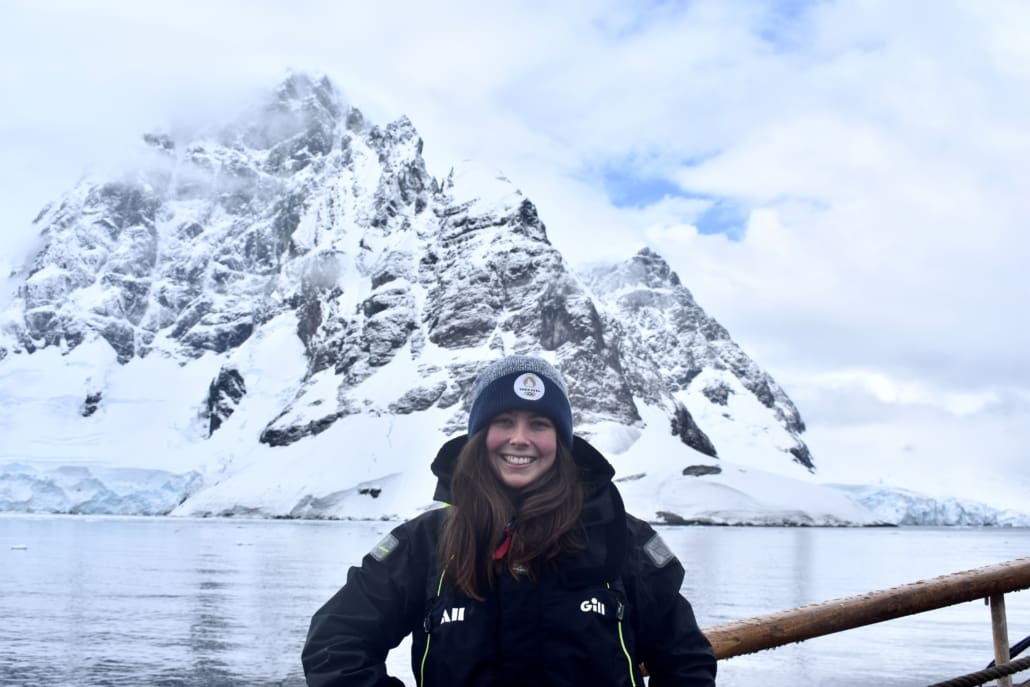
Once in Antarctic waters, the team sailed along the Antarctic Peninsula, learning what makes this place so special through landings at various locations.
“Snow was falling and beginning to settle on the deck of the ship, and four humpback whales were feeding right beside us. It felt magical,” said Inspiring Explorer Margot Martin-Babin.
The team were fortunate to be mentored by world-record-breaking solo-sailor and environmental activist Lisa Blair, who witnessed their growth every step of the way.
“It’s been an incredible journey watching the Inspiring Explorers™ grow and develop their ‘Explorer Mindset’,” said Lisa. “They’ve been truly tested, and in every challenge, they’ve shown remarkable resilience, teamwork, and leadership. Their curiosity and willingness to get involved in every aspect of the expedition has been inspiring to see.”
The Inspiring Explorers™ brought their interests and skills together to capture content for their outreach project, a video journal series connecting how their experience both mirrors and differs from those who crossed oceans and explored Antarctica in the past.
“Filming our journal series in an environment out of your control was challenging, but the stories we captured feel true to our journey. I’m really looking forward to the final result,” said Inspiring Explorer Sam Dunlay.
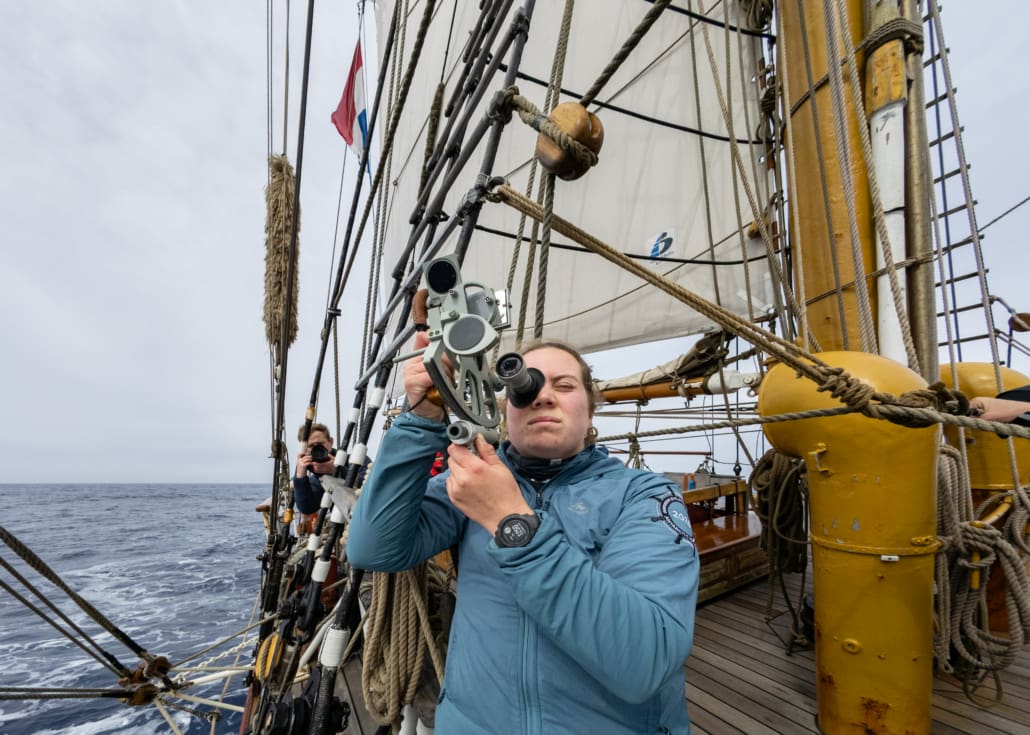
As part of this, Inspiring Explorers Eliza and Matthew compared ocean navigation methods and the equipment used by heroic era explorers to now.
“We were fortunate to learn how to take a noon sight with a sextant, a traditional navigational equipment used to determine your position at sea, from the second mate, Clara,” said Inspiring Explorer Eliza McCracken who was also representing Spirit of Adventure Trust as part of a new partnership.
“It really struck me how much patience, resilience, and navigational knowledge early explorers would have needed. They had none of the technological backups that we rely on today.”
Inspiring Explorers Josiah, Precious, and Meleki used captured a Pacific perspective of exploring by boat, while Inspiring Explorer Libby compared the wildlife and environment of the Antarctic region in the heroic era with what it is like today and looked to the future.
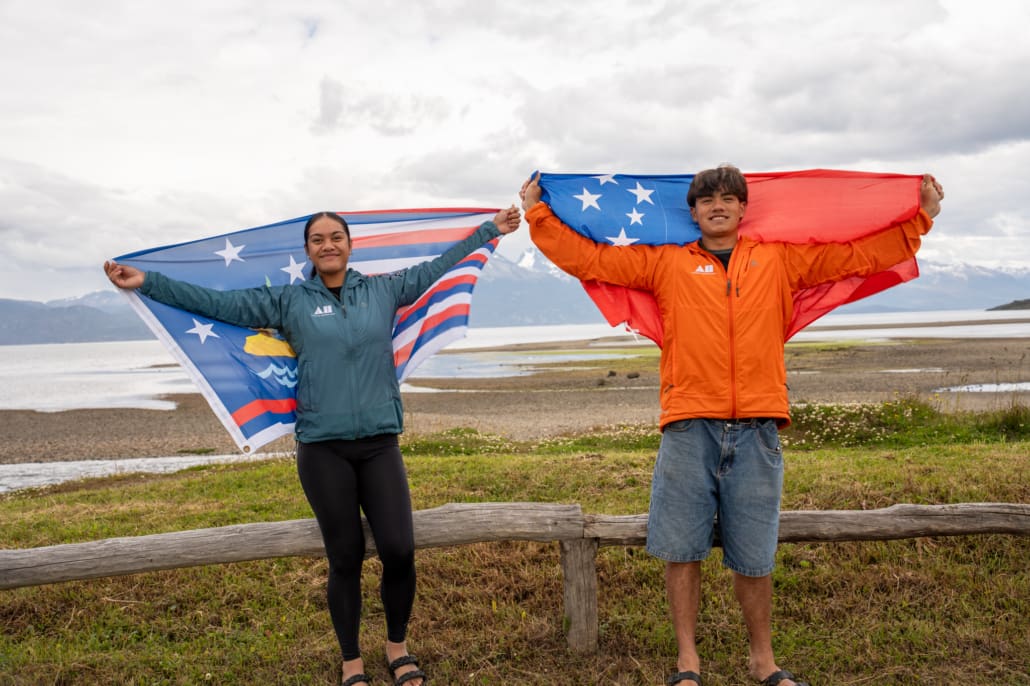
“I felt so proud as a Cook Islander, especially being the first from my island of Rakahanga to reach Antarctica on a tall ship. At times I was overwhelmed with emotion feeling blessed, grateful, and deeply privileged to experience something so many people dream of,” said Inspiring Explorer Precious Tupou.
Journalling their experiences, the team discovered the true heart of Antarctic Exploration.
“Coming back home, I find myself seeking new experiences that put me in that feeling of unfamiliarity again. For me, the trip doesn’t end in Antarctica, it carries into how I live afterwards and hopefully inspires others to see that stepping into the unknown can be worth it,” said Inspiring Explorer Meleki.
A Special Visit to Port Lockroy
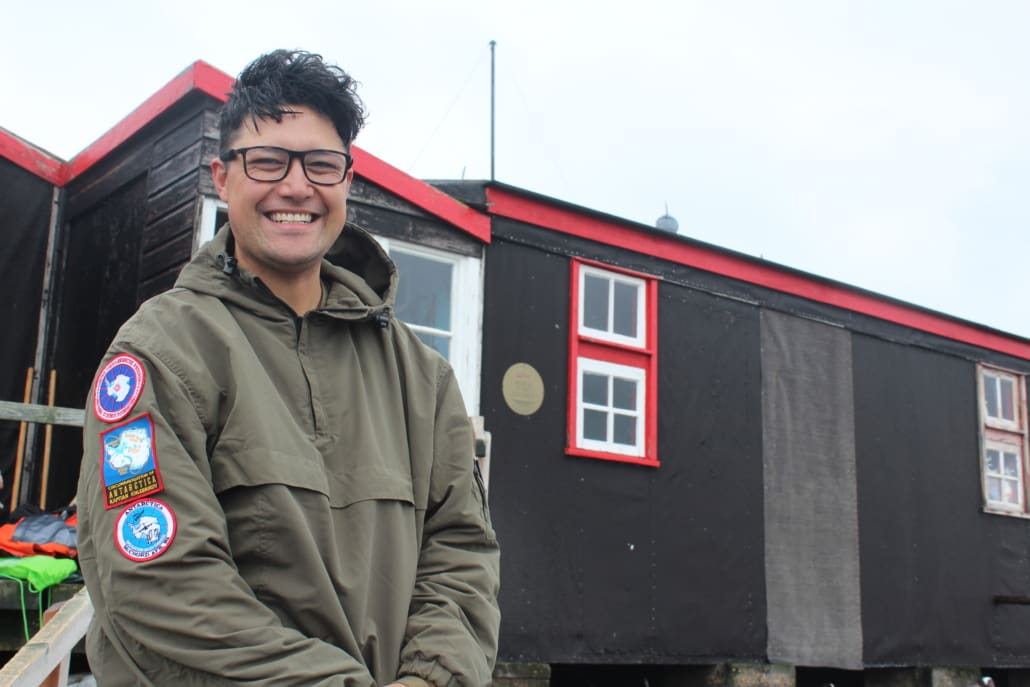
Our friends at UK Antarctic Heritage Trust (UKAHT) welcomed the team to Port Lockroy, one of seven historic sites cared for by UKAHT, who also oversee the wreck of Shackleton’s ship Endurance.
Base A, Port Lockroy was established in 1944 as part of a wartime mission code-named Operation Tabarin. Since 2006, UKAHT has looked after the site and continues to share the site with visitors from around the world.
Our team learned firsthand about the conservation projects underway at the site. The visit highlighted the strong connection between the two Trusts recognising the shared challenges both organisations face in conserving Antarctica’s remarkable cultural heritage.
The visit was especially meaningful for Inspiring Explorer Josiah Tualamali’i, who would have happily stayed longer to absorb even more of the extraordinary stories held here.
“As a historian, visiting Port Lockroy felt profoundly special. Seeing firsthand the realities of conserving Antarctic cultural heritage deepened my respect for the people who live and work in this environment,” said Josiah.